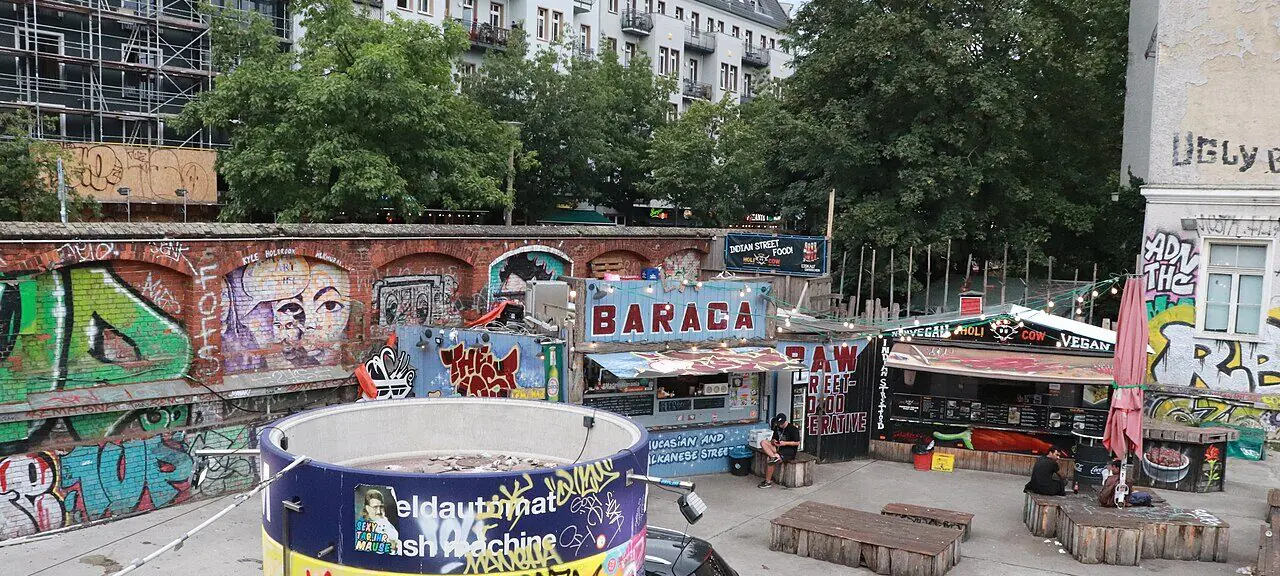
(Author’s note: The name “RAW” comes from Reichsbahnausbesserungswerk, or “German Reich Railway Repair Works,” and Gelände means “grounds.” The site dates back to 1867, when the Royal Prussian Railway Workshop Berlin II was built there.)
This summer in Berlin, more clubs and cultural spaces are in danger of closing as a result of pressure from the usual suspects: landlords who want to turn beloved venues for music, dancing and art into office spaces, retail stores and bland luxury apartments.
RAW Gelände, a collection of clubs and concert halls located in a former train car repair yard in the district of Friedrichshain-Kreuzberg, is currently facing intense pressure from their landlords The Kurth Group (a private real estate company). Cassiopeia, a dance club located on the premises, was served an eviction notice ordering them to vacate the area by the end of June.
‘Berlin is dying ….’
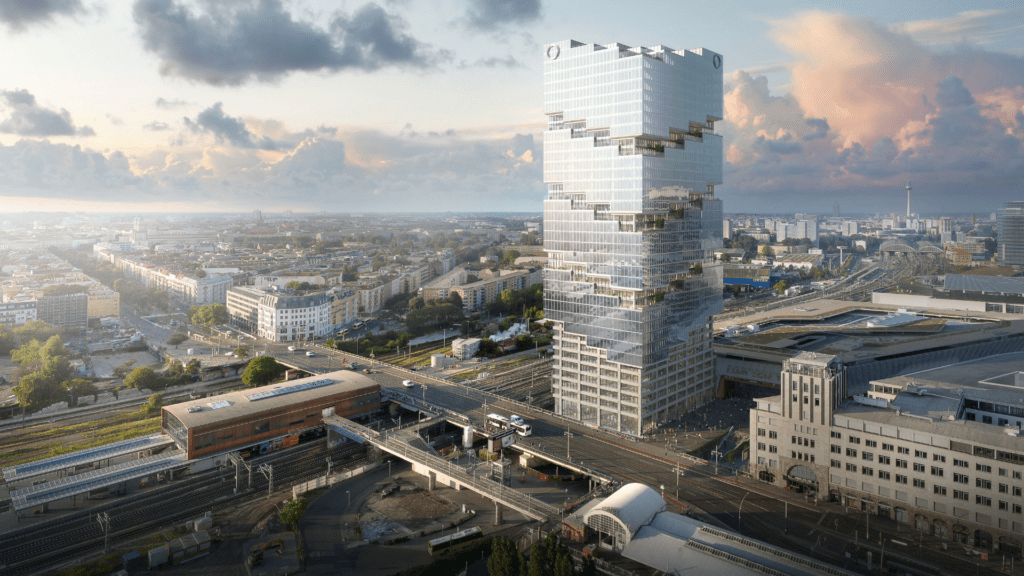
And what does The Kurth Group plan to build instead? Offices, apartments, retail and commercial spaces all collected together in what’s known in development-speak as a “mixed use urban district.” Oh yeah, and it will of course include a giant tower to make the Amazon campus across Warschaer Straße feel less lonely.
To us denizens of Berlin nightlife, Queen’s song, “Another One Bites The Dust” comes to mind. As the news of The Kurth Group’s plans broke, comment sections far and wide decried the development, lamenting it as yet another sign that “Berlin is dying,” “Berlin is over,” and “Capitalism is killing the city’s culture.” The area has operated as a cultural hub formally since 1999, with DIY-style parties and events happening in its abandoned warehouses since 1994. For more than 30 years, it has served as a beacon of nightlife for locals and tourists alike.
Berliners were naturally upset and in true Berlin fashion, quickly mobilized into protest. Even the Berlin Senate and the Friedrichshain-Krezberg District Government got involved and publicly criticised the plans, calling for further negotiations with Cassiopeia.
As a recovering New Yorker, it’s staggering to see the government actually stick up for cultural spaces in the face of hyper capitalist development.
This kind of pressure on artistic venues from landlords is unfortunately not an isolated incident in Berlin. But happy endings are not impossible.
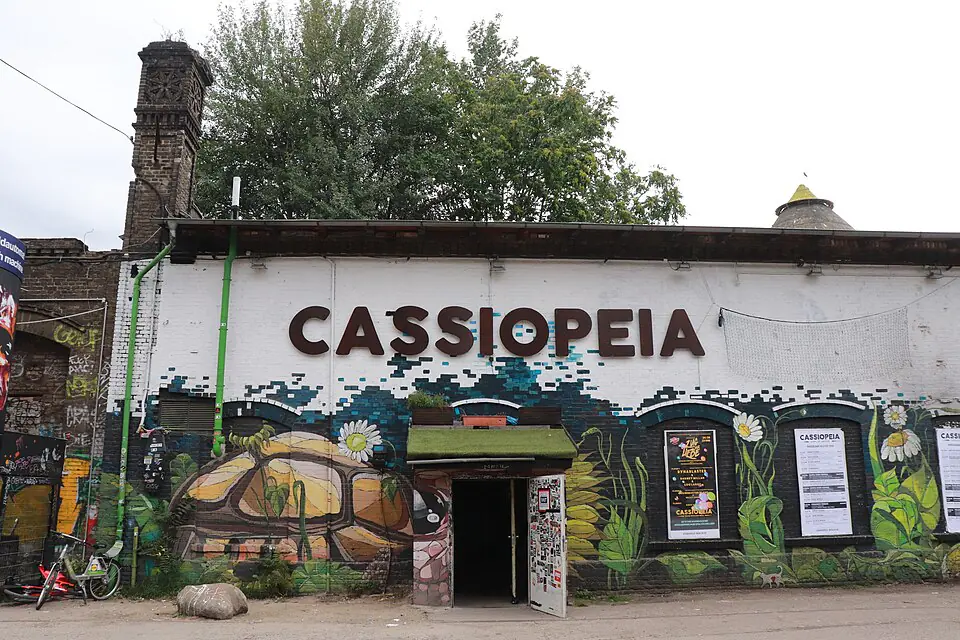
Image source Wikimedia Commons.
Will history repeat itself?
In 2022, the club Wilde Renate – a multi-floor venue also located in Fredirchshain – announced that they were being forced to relocate due to redevelopment plans from their landlord. Similar to the current situation at RAW Gelände, they mobilized public support and secured the backing of the local government and The Berlin Club Commission, a trade association and advocacy organization that protects clubs as cultural spaces. After a period of what looked like certain death for Renate, they managed to negotiate with their landlords and the club remains fully open today in its original location.
Although it doesn’t look great for Cassiopeia and (very likely) other surrounding venues in the area, cases like Wilde Renate are a ray of hope in the storm cloud of corporate gentrification.
Other closing bars and cultural spaces
The impending doom of new development plans from greedy landlords isn’t just limited to larger venues like Cassiopeia or Wilde Renate. Neukölln bar and small performance venue Das Gift is also being forced out after sixteen years of providing a space for music, comedy and art. Their landlords, allegedly responding to noise complaints from neighbors, refused to renew their lease despite the bar taking ample measures to soundproof the venue. After attempts to raise a similar level of public support as Renate and Casiopeia, Das Gift finally announced in May that they had lost the fight and would be closing its doors at the end of July.
Also closing in Neukölln is the ambient music listening bar KWIA, a truly esoteric and trippy space catering to those who like to enjoy a cocktail with psychedelic lights and lush, textural soundscapes. KWIA is the kind of delightfully odd place one imagines could only exist in a city as weird as Berlin. Unfortunately, weird doesn’t pay the bills and KWIA recently announced it will be closing due to an inability to keep up with rising rents. It seems their landlords realized they could make more money renting the space to someone whose business turns more of a profit, perhaps another Instagram-able matcha latte spot.
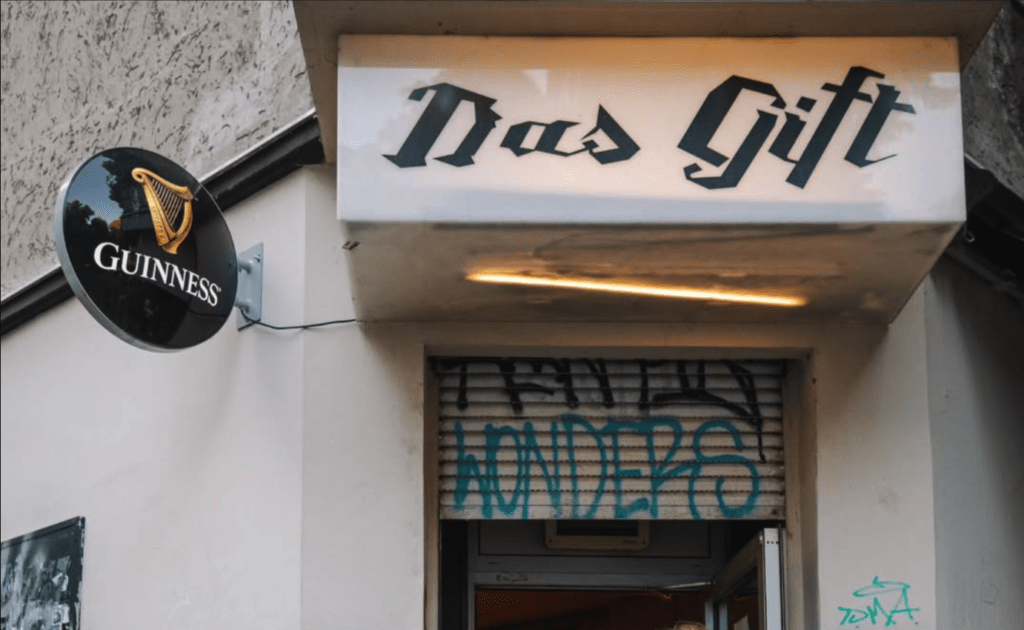
Textbook gentrification, but how does it compare to New York?
Looking at these three venues’ stories, it’s easy to see a pattern: Berlin landlords have read the room and decided that they want to make more money, which should surprise no one. Berlin real estate has dramatically increased in price and demand, and those who control the leases on low-profit spaces such as Das Gift or KWIA don’t really care about cultural value. Like the true capitalists they are, they just want to make more money.
The great irony of course is that these quirky bars, clubs and music venues, places where artists and weirdos gather to create and to build community, are the very DNA of what made these neighborhoods “hip”, “cool” and attractive to the people with more money who would be willing to pay higher rent to be a part of the “Berlin Scene.” Ah, textbook gentrification!
Having lived in Brooklyn for sixteen years, it’s sad but not surprising to see the same kinds of forces at work that seem to have an insatiable desire to turn neighborhoods into soulless, high-rent blighted ghost towns of empty offices and overpriced cafes. But unlike Gotham, Berlin has a bit more state support behind it and a fierce spirit of protest. Yes, there’s a sense that big money wants to push out the starving artists. But there’s also a quiet resilience amongst the culture makers and creators, that hey, we’re artists, and art, like love, always finds a way.
**********
See more about Berlin here in Dispatches’ archives.
Read more from Chris here.