Croatia is dogged by demographic issues, but there are an increasing number of foreign nationals purchasing property, either as an investment or to actually live.
Croatia is a curious country in this sense as what you can buy (and what you can do with it once you own it) is determined by your nationality.
For Americans seeking to escape Trump and perhaps explore their European ancestry, this has become a hot topic.
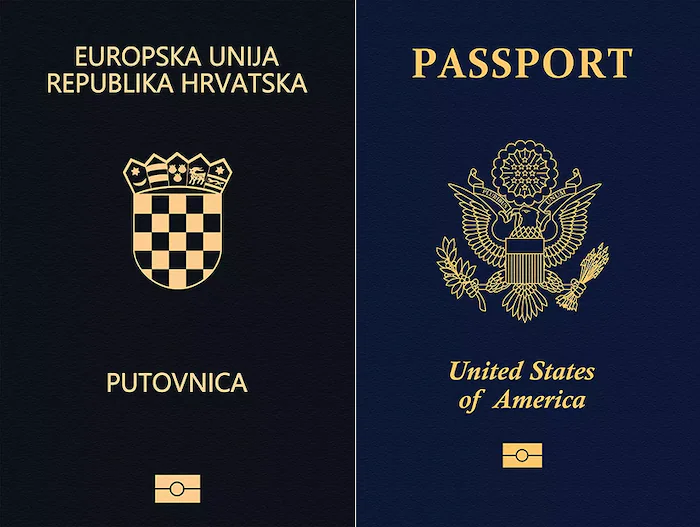
If you have Croatian ancestry and want to become a citizen
Let’s say you’re a US citizen with Croatian ancestry. In order to qualify for a Croatian passport based on descent, you need to be able to prove that you have a Croatian ancestor connected to you in a straight line of descent and who permanently left Croatia. “Straight line” in this sense means they can be a parent, grandparent, great-grandparent, etc as long as the Croatian Government considers them to have been Croatian emigrants. Unlike recent changes to the laws of other countries, there’s no limit to how far you can go back, as long as they’re “straight line” descendants and you can prove their connection to you.
An extensive list of requirements can be found here, and you’ll need to prepare for a longer wait and a lot of paperwork, but once you’ve been granted Croatian citizenship, there’s no restriction on what you can buy, where you can buy it or what you can do with it once you own it. For Americans in particular, it pays to be aware that this may well be a baptism of fire, as Croatia’s administration is (in)famous for its bureaucracy and sluggish pace. There is no such thing as customer service as far as this is concerned.
You also don’t need to give up any other nationality once you acquire Croatian citizenship. An example: If you’re a US national who also holds Croatian citizenship, you’re treated as a Croatian citizen only by Croatia.
If you’re a US citizen and a citizen of any EEA country
You don’t specifically need to be Croatian. You can hold the citizenship of any EEA country and that will permit you to purchase any type of property, anywhere, and for any purpose on the same basis as Croatian citizens. If you’re a US citizen and you happen to also hold Italian nationality, then this applies to you, you just go through the process as an Italian passport holder only. There used to be restrictions on EEA citizens on purchasing agricultural land in Croatia, whereby said buyer would need to open a company in Croatia in order to indirectly buy the land.
It’s important to note that that rule was scrapped in July 2023 and no longer applies to anyone from the EEA.
For example:
• If you’re a US citizen who also holds French citizenship, you can buy Croatian agricultural land on the same basis as a Croatian citizen can.
If you’re a US citizen with no Croatian ancestry or EEA passport
• If you’re a US citizen without a Croatian or other EEA passport, and you’ve got no right to apply for one, then your options are limited but it’s still possible. The rule goes that if your country allows Croatian nationals to purchase property, then Croatia allows the citizens of that country to do the same.
• The US is more particular as this goes down not only to the USA as a country, but your state of residence. If you’re from Iowa and Iowa allows Croats to buy property there, then you’re set. If you’re from Kentucky and Kentucky doesn’t allow Croats to purchase property there, then you cannot. An example: If you’re a US citizen and you want to buy Croatian property, you can do so only if your state of residence allows Croats to do the same. In other words, you’d need to check what the reciprocity agreement is between Croatia and your state of residence in the US. This need for reciprocity means that you’ll need to get official approval of the transaction by the Ministry of Justice, which can drag on for weeks to months.
There are a few other hoops you’ll need to jump through, such as having the sale registered in Croatia’s Land Registry no later than 60 days after completion. As a US citizen, you are prohibited from purchasing Croatian agricultural land as an
individual (referred to as a “natural person” in Croatia). You can do so indirectly by opening a Croatian company and placing yourself as the owner. Once you’ve done that, you can own and manage the land, but frankly I would avoid this like the plague. It is sticky, paperwork- heavy, complex, and very costly.
Should you want to do this, engage a lawyer from the beginning.
I’d also advise against seeking any sort of mortgage agreement from a Croatian bank if you’re coming from the US, The vast majority will absolutely not provide you with one, So, I recommend either paying cash or securing everything you need from a US bank before you begin this process.
You can’t automatically move to, or live in, Croatia, but you can apply to do so (more on that below).
An important caveat for US nationals without Croatian or EEA citizenship
Purchasing a property in Croatia as a US citizen without dual nationality does not grant you the right to live in Croatia. You’ll be subject to all of the usual requirements placed on non-EEA citizens and non-residents.
You can stay in Croatia for up to 90 days in any 180 day period. You will, however, be able to use your property ownership as a way to apply for temporary residence under the vague category of “other purposes” (Croatian: druge svrhe).
–––––––––––
Read more about Croatia here in Dispatches’ archives.
See more from Lauren here.

Lauren Simmonds
Lauren Simmonds is the editor of Total Croatia News, the largest English language portal in Croatia. She lives in Zagreb, Croatia, and is a translator, content writer, interpreter and the co-author of "Croatia - A Survival Kit for Foreigners," which was published in 2022.