(Editor’s note: Dispatches recieves no remuneration for this post on Picnic. We provide it as a service to our expats.)
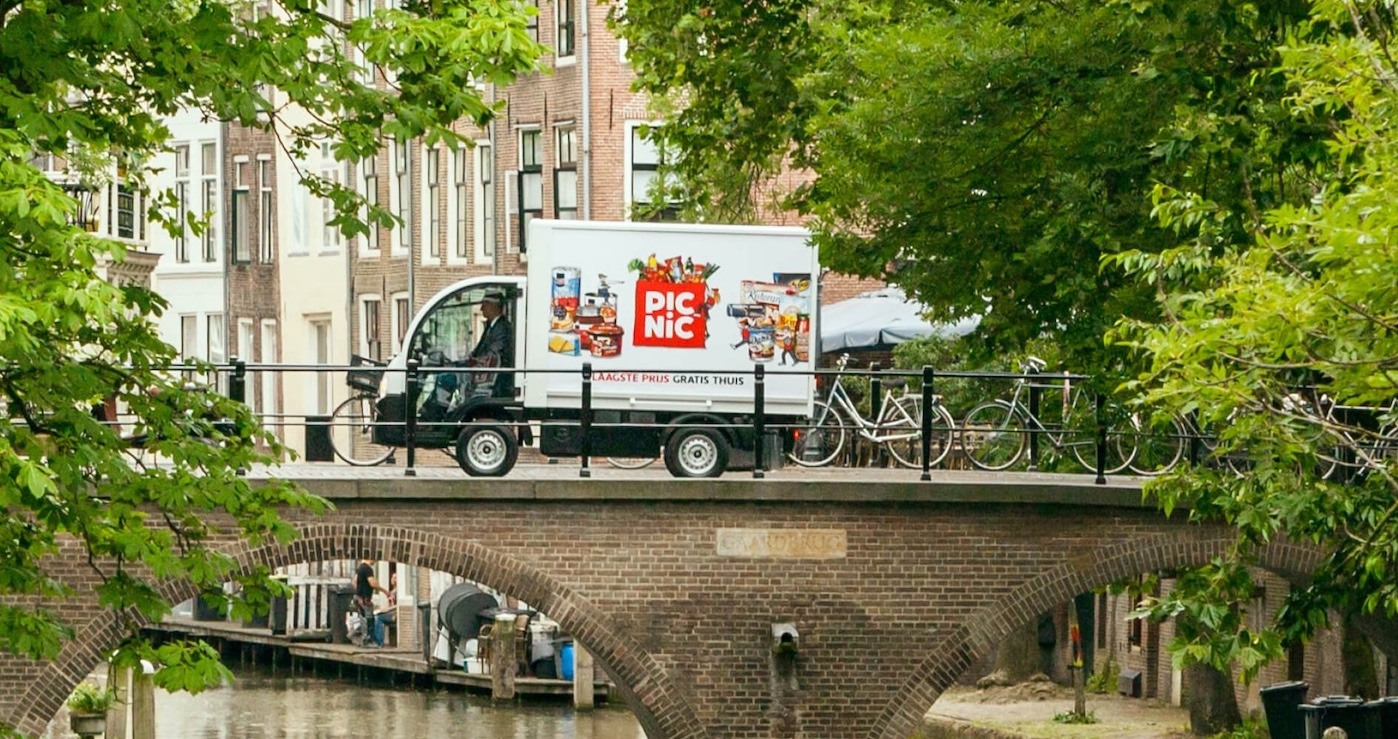
On any given day in the Netherlands, you’ll see them quietly gliding through residential and urban streets: small, narrow and impossibly cute electric trucks.
Those trucks are Picnic delivery drivers.
To say Picnic has grown fast would miss the point. What’s remarkable isn’t just its scale, but how deeply it’s woven itself into daily Dutch life. People are opting for less time in stores and more convenience, with groceries arriving on their doorstep, week after week.
Picnic is a Dutch homegrown grocery delivery company with no physical stores, only distribution centers. Founded in 2015 in Amersfoort, Picnic expanded its distribution area slowly and deliberately, city by city, until it became one of the most recognizable consumer brands in the country. Its latest funding round of 430 million euros in November 2025 was the largest in the Netherlands. This comes on the heels of also topping the list in 2024 with its 350-plus million round.
Convenient, punctual
It was founded by seasoned entrepreneurs and backed by family funds and other powerhouses, including the Bill & Melinda Gates Foundation Trust and the German supermarket chain Edeka. From a business perspective, Picnic’s success makes sense: experienced founders, patient capital and a logistics model built for efficiency.
But funding alone doesn’t explain why people genuinely like Picnic. For that, you have to look past the balance sheet.
What matters is how that business strategy feels on the customer side.
And I know, because I’ve been a Picnic customer for years.
Picnic has long been my go-to grocery delivery service, and for good reason.
In a country where customer service leaves a lot to be desired, Picnic is using customer service and convenience as its cornerstone values. Of course, it has competitive pricing, which is essential in a country of very price-conscious (many would say cheap) people.
I placed my first order with Picnic in October 2019, when I finally got off the waitlist. I had been on the waitlist for a few months, and getting off the list was based on when Picnic expanded to my area and the demand around me. (It is interesting to note how deliberate its expansion was. Picnic didn’t even expand to Amsterdam until early 2018, a few years into its journey.)
And then we all know what happened in March 2020. The restrictions during the peak of the coronavirus just encouraged more people to do grocery deliveries. For me, that habit stuck, and I continue to order many of my groceries via Picnic.
Here are a few of the reasons why I’ve continued to shop with Picnic:
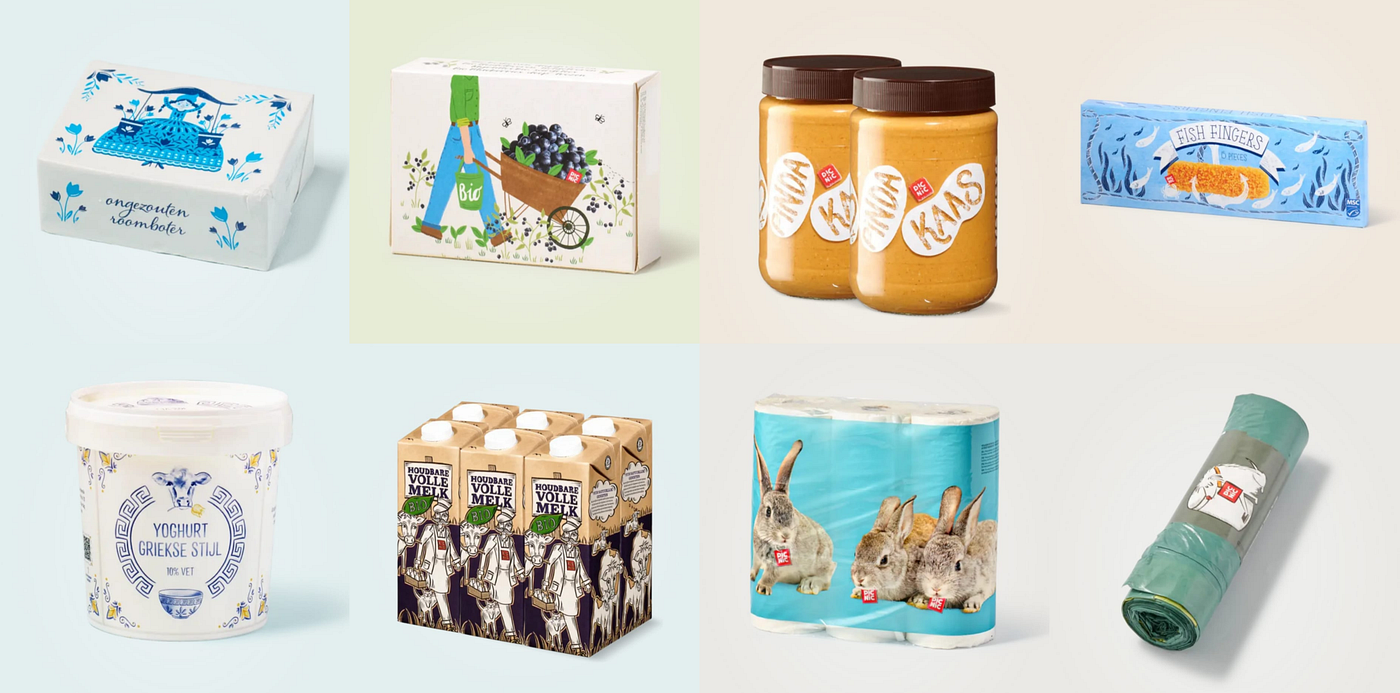
- Prices are competitive, and they now have some of their own “store brand” products, although I still go to other shops for some specific products.
- There’s no delivery fee or membership fee. You just have to have a minimum spend of 45 euros (it used to be 35 euros). My family uses it for big stockups or for a full week’s groceries for our family, and it saves us a trip to the grocery store by car or more frequent trips.
- It’s convenient and punctual. Customers choose from a few one-hour time windows, which are usually available the next day. These times are throughout the day, and so I can pick depending on my schedule. As the time gets closer on the day of delivery, I can track your delivery truck and have a more exact time range.
- They have a 100-percent fresh guarantee, and you can claim broken products. With a few clicks in the app, you can submit a claim, and they refund the money for that item.
Does all of this sound like standard corporate promises? The difference is that Picnic actually follows through. No, strike that … it goes above and beyond in a few areas.
Predictability
With so many delivery times available and live tracking of your delivery, it’s easy to rely on Picnic. There’s usually a convenient time available, and I’ve only had my delivery delayed once in all the years of ordering. And that one delay of an hour was recently during the abnormal January 2026 snowstorm. Yet that seemed like a legit reason, and I didn’t give it much thought. Two days later, I received this email:
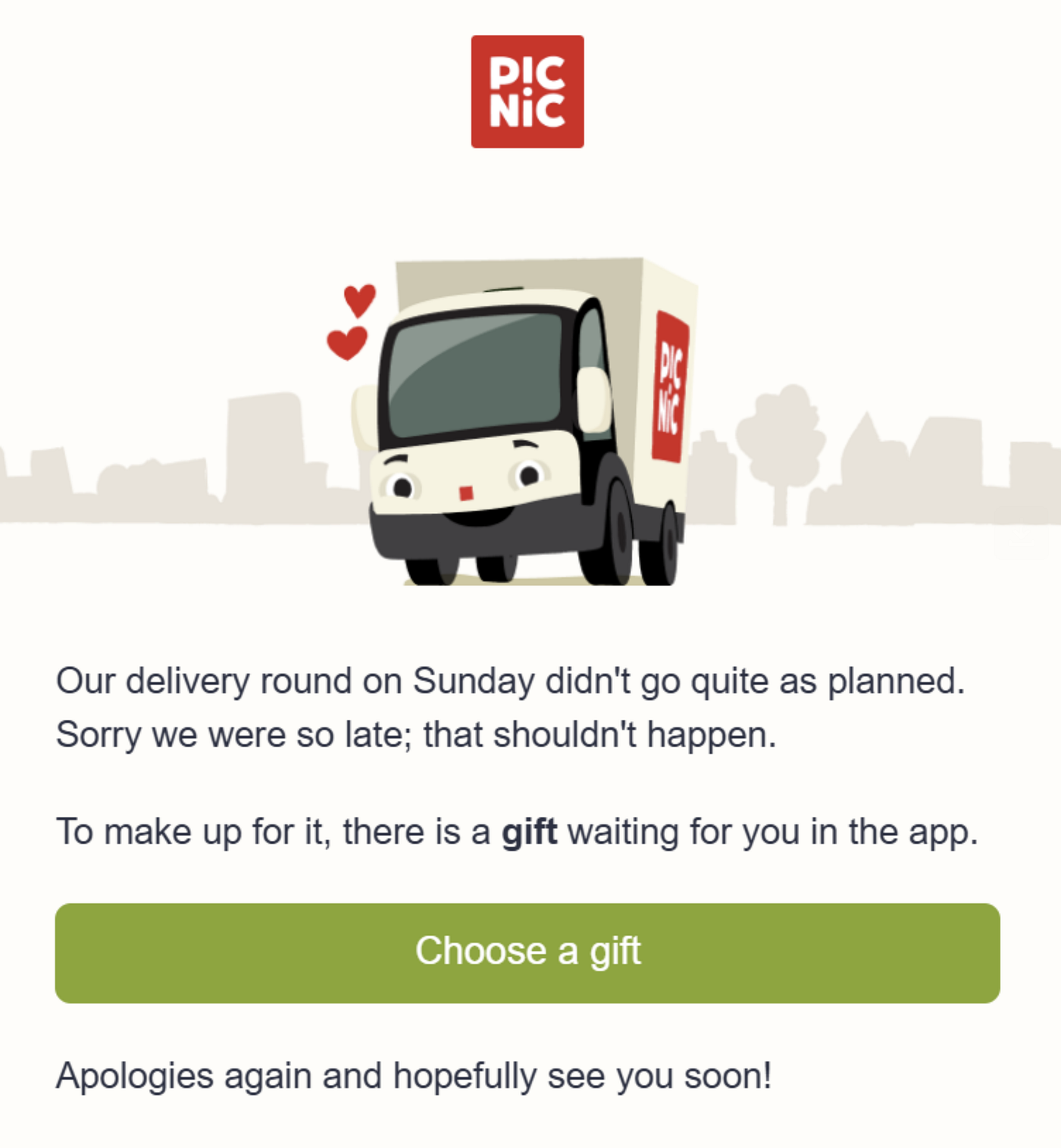
I could choose from five products listed in the app, and I got my selection for free in my next order.
Empathy
That free gift was nice, but it was not out of the ordinary. It’s the service I’ve come to expect with Picnic. A refreshing, no-questions-asked customer service that makes you want to continue ordering with the app.When a product has been broken or when an “herb” spice mix ended up being really spicy without being labeled as such, I’ve submitted a claim. No questions asked, they refunded me my money.
And it’s not because I’ve had lucky experiences. I’ve heard this from others.
Usually, the delivery drivers leave the groceries right inside your front door, but one expat recently told me of her experience where the delivery person went above and beyond when she mentioned that she was having issues walking. He quickly said, “Oh, it’s no problem,” and brought the groceries all the way into her kitchen.
Low-friction problem solving
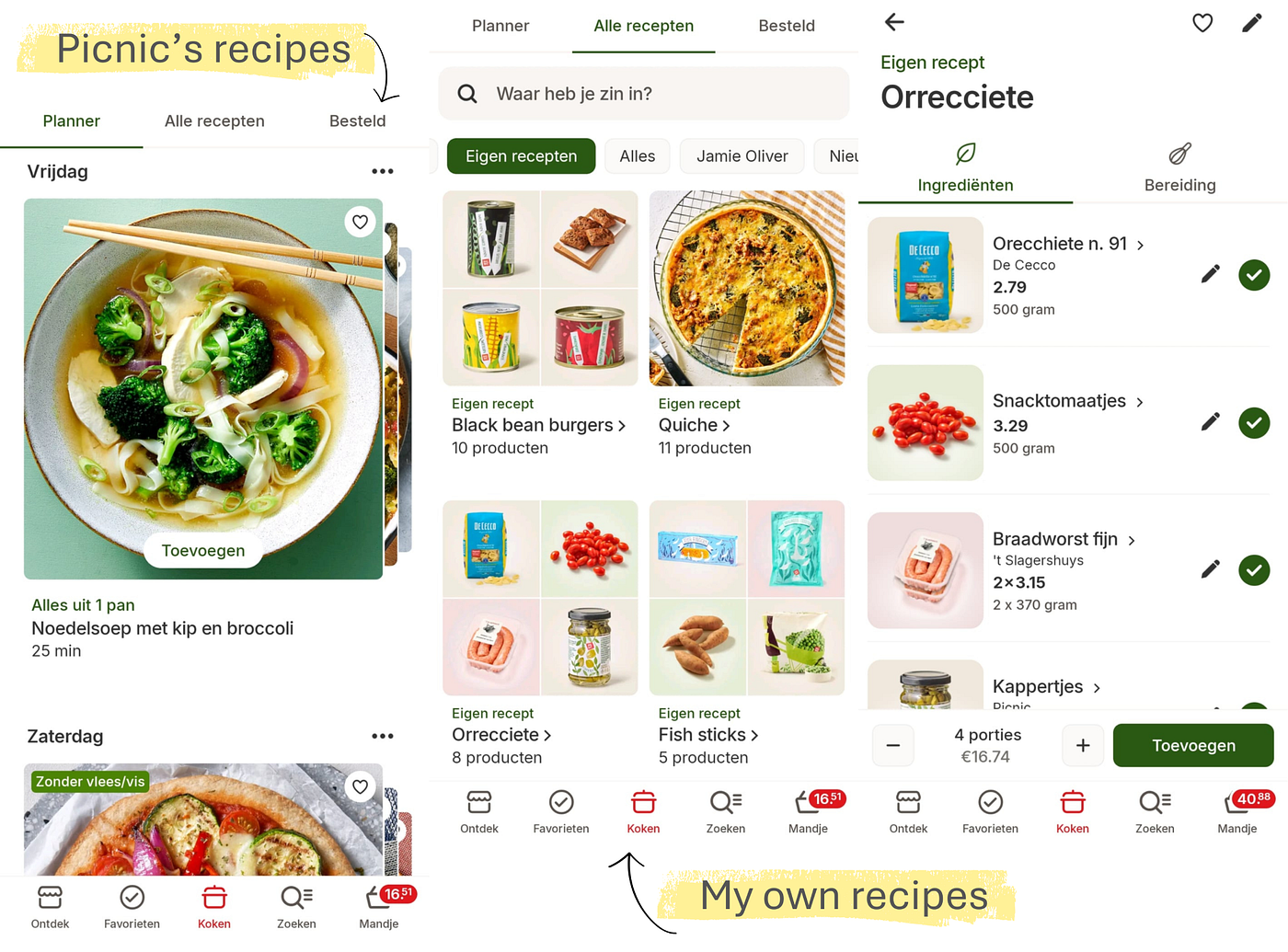
If the five-second refund claims in the app weren’t enough, Picnic just added one huge feature that made it all the more convenient. They just added the option to create your own meals in their app.
This is the moment they really had me.
For a while now, the Picnic app has shown meal ideas, and with one easy click, all the ingredients are added instantly to your cart. But, while all the recipes look good, do I have the time to make it mid-week … and will my kids eat it?
This question always made it hard to mealplan. So for a while I had been thinking, wouldn’t it be great (and super convenient) if I could add my own meals that I cook every week or every month. Well, I must not have been the only customer to think about this and request it, because Picnic added this feature, and I cannot express in words how much easier mealplanning became. It now takes just a few minutes to plan out and order your groceries for the week. And as a busy parent, that’s key. Instant customer loyalty…check.
As a young company, though, Picnic still has a long way to go. It has expanded into Germany and France, and the logistics challenges in Germany are great. Investment is rolling in to fund this growth. But, like many tech companies, Picnic has never made a profit, although it says it is operationally profitable in the Netherlands.
In terms of customer experience, Picnic has definitely made it.
In a country where customer service is often found lacking by many expats, Picnic feels almost radical in its effort to make everyday life easier. That’s why people trust it with something as mundane – and as intimate – as feeding their families.
There’s no secret in my book why Picnic has become the Netherlands’ version of a unicorn startup, and other startups can learn a few lessons from them. But the lesson isn’t about groceries or logistics. It’s this: when you remove friction consistently, listen carefully and treat convenience as a form of respect, loyalty follows.
Picnic didn’t just build a successful business model. It built a habit.
––––––––––
Read more about the Netherlands here in Dispatches’ archives.

Lane Henry is an accidental long-term expat. She is an American who came to the Netherlands for two years—or so she thought. She has now lived in the Netherlands and explored Europe for over a decade.