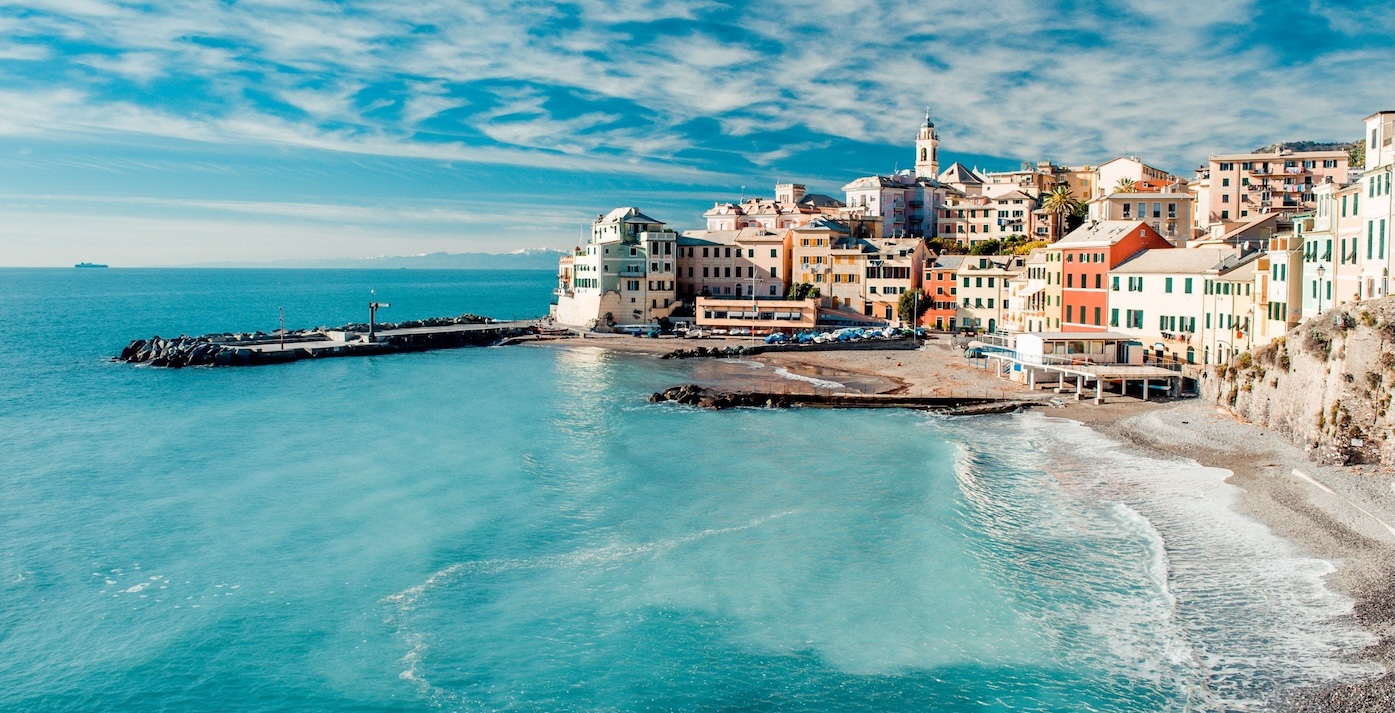
Genoa is rarely included on Italian tourist itineraries, which is a shame – or a blessing if like me, you prefer places that aren’t overrun with tourists! The capital of Liguria, nestled in the heart of the Italian Riviera between the sea and the Apennine Mountains, is well worth a visit.
With its old palaces overlooking the sea, its maze of narrow streets, and its parks planted with cedars and rose bushes, Genoa stole my heart, and it might just steal yours too.
If you have the opportunity to visit, here are four things you shouldn’t miss in Genoa.
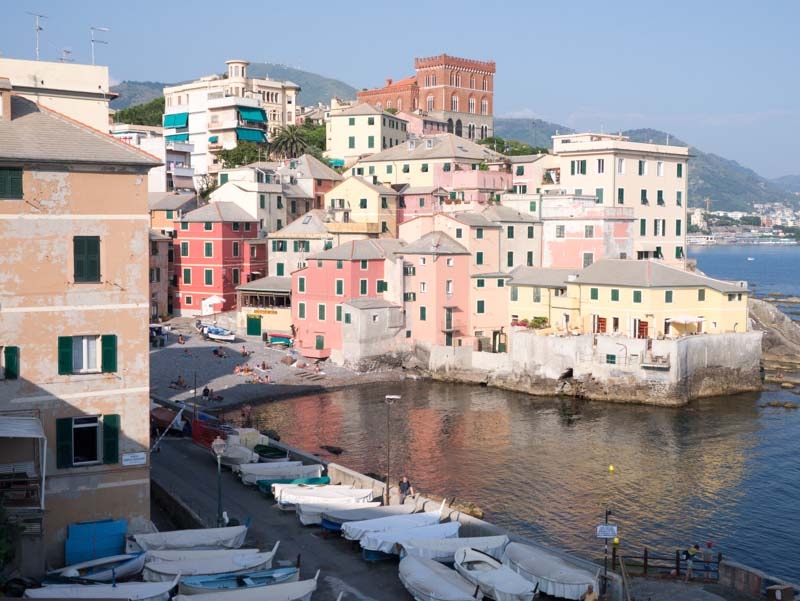
Enjoy walks along the sea and their breathtaking views of rocks and coves
Whether in the city center or on the outskirts, Genoa offers several long promenades along the sea. I particularly recommend one that starts in Nervi, a rather bourgeois neighborhood located east of Genoa. When you exit the Genova-Nervi train station, turn right and begin your walk at Nervi Park (Parchi di Nervi).
This large garden covers 10 hectares between the sea and the mountains. On Sundays, it is frequented by families who enjoy the shade of palm trees and cedars, or stroll through its rose garden, which has more than 200 different species.
From Nervi Park, continue your walk along the Anita Garibaldi promenade (Passeggiata Anita Garibaldi), which runs along the coast.
In my opinion, this promenade is a perfect blend of authenticity and urban development.
In fact, the coastal environment has been respected – there are no hideous buildings disfiguring the landscape. But access to the sea is still sufficiently developed that you don’t need to be an experienced climber to get down to the coves. Numerous stairways and paths lead safely down to the narrow beaches below.
Take the elevators to see the city, mountains, and harbor from above
Let’s continue our exploration of scenic spots and head to the elevators to see the city from the top of the hills. Much of the city of Genoa is built at altitude. Its inhabitants have invented ingenious modes of transport – two funiculars, a rack railway … and 14 elevators. The one I took was the Castelletto Ponente elevator (Ascensore Castelletto Ponente). It goes straight up to the Castelletto neighborhood’s lookout point, where you can enjoy a 180-degree view of the city, the port, and the surrounding mountains.
If you take it in the late afternoon, you’ll have the chance to photograph the sunset over
the sea.
Tip ��
The Castelletto Ponente elevator is marked on Google Maps (above), but the location corresponds more to the arrival point than the departure point. So keep an eye out for the entrance, and don’t do what I did; climb again and again through the surrounding alleys until you reach the belvedere, only to realize you’ve missed the elevator!
Stroll through the caruggi of the city center and visit ancient palaces
Once you’ve had your fill of natural landscapes and breathtaking views, you can immerse yourself in the city center of Genoa, the historic heart of the city – the former capital of a republic that lasted seven centuries and, at its peak, ruled over a maritime empire stretching from the island of Corsica to the Crimea.
The city center is made up of a maze of narrow streets called “caruggi,” which form a vast pedestrian area where you can stroll away from the cars. Genoa has dozens of palaces, 42 of which are listed as UNESCO World Heritage Sites. It is worth visiting a few of them to get a real sense of what it meant to be a notable figure in the Republic of Genoa.
Three of them – the Rosso, Bianco, and Doria-Tursi palaces – are located on Via Garibaldi, which is convenient for grouping visits together.
• Palazzo Rosso (the ‘Red Palace’) was built in the 17th century by two brothers who lived on the first two floors, while the third floor belonged to the Duchess of Galliera, who preferred to live at the Hôtel Matignon in Paris –the luxurious furniture and statues that can be seen in the palace today come from there.
• Palazzo Bianco (the ‘White Palace’) is the museum with the largest collection of paintings, including works by Rubens, Murillo, and Caravaggio, while Palazzo Doria-Tursi exhibits two violins belonging to the great master Paganini.
• But my favorite is the Palazzo Ducale. Formerly the seat of the Republic of Genoa’s administration, it is now a cultural and event center. I particularly liked the blend of tradition and modernity – the majestic period staircase was later complemented by another modern staircase with a green metal structure on a terracotta floor, which descends from the terrace to local associations with offices in the basement.
Taste Genoa’s specialties – focaccia and pesto
No tourist post about Italy can ignore the culinary adventures this country has to offer. A gastronomic tour is a must, and Genoese cuisine leaves you spoiled for choice – fried fish, pies, and minestrone (Genoese style), to name but a few.
But the city’s most famous specialties are focaccia and pesto. Focaccia alla Genoese is a bread made from flour and olive oil, to which onions, cheese, sage or rosemary may be added. To live like a true Italian, eat your focaccia for breakfast and dip it in your morning cappuccino!
To make it at home, follow this recipe. It’s very simple. As for pesto, it needs no introduction. This sauce made from cheese, pine nuts, basil, and olive oil is known worldwide. It originates from Genoa, where it is incorporated into the local lasagna recipe – layers of pesto replace layers of meat. Yummy! It can also be used as a sauce for gnocchi, or even enjoyed on a simple slice of bread.
Here is the recipe for pesto if you want to cook it when you get back. Buon appetito! Enjoy!
••••••••••
Read more about Italy here in Dispatches’ archives.
See more from Gaëlle here and here.

Gaëlle Anne Fouéré
Gaëlle Anne Fouéré holds a Master's degree in journalism and has contributed to major outlets including Le Monde and the BBC website. Gaëlle later joined the United Nations system, where she worked with several agencies (WHO, UN Women, and peacekeeping missions), mainly producing both online and offline publications.