My relationship with Brussels began in May 2024 when I moved here. On arrival, I couldn’t stop comparing everything to where I had lived in the Netherlands – a mistake I still make every single day. Even now, more than a year later, the relationship remains difficult, with occasional negativity on my end.
Brussels may be in the hearts of many but it still struggles to find its way into my soul. Because of the language barrier (I am not a French speaker), conversations are usually very brief.
This might be one of the reasons why Brussels and I are still struggling to adjust to each other. Living in Schaerbeek feels like an adventure of its own.
A brief history …
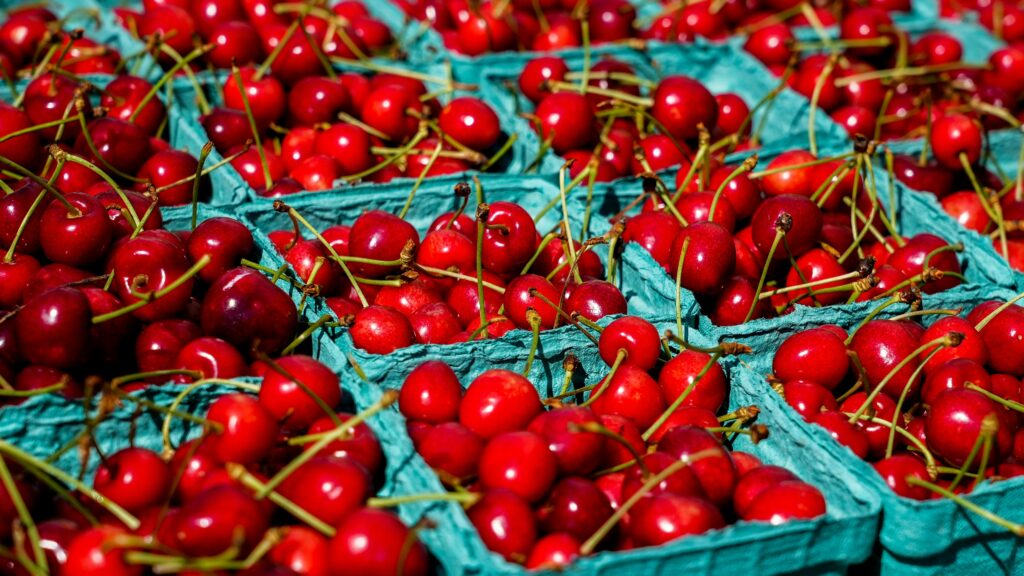
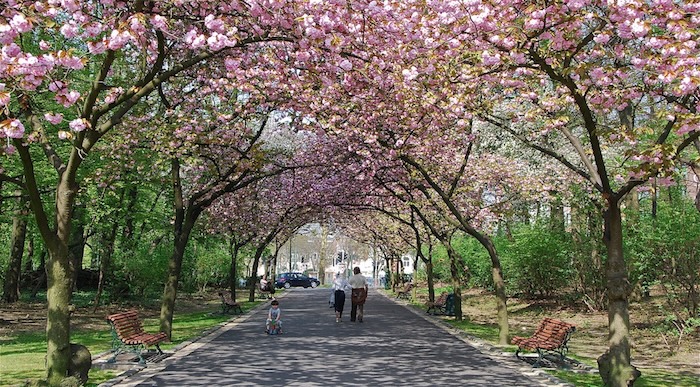
The name of the neighbourhood comes from the Franconian (Old Dutch) words schaer (notch, score) and beek (creek). The Schaerbeek is also known as “the city of donkeys”. It dates back to the time when local residents, known for cultivating sour cherries mainly used in kriek beer, would bring their harvest to the Brussels market on donkeys. Today, the animals can still be seen in Josaphat Park and sour cherries continue to grow along the streets of the Le Quartier Diamant.
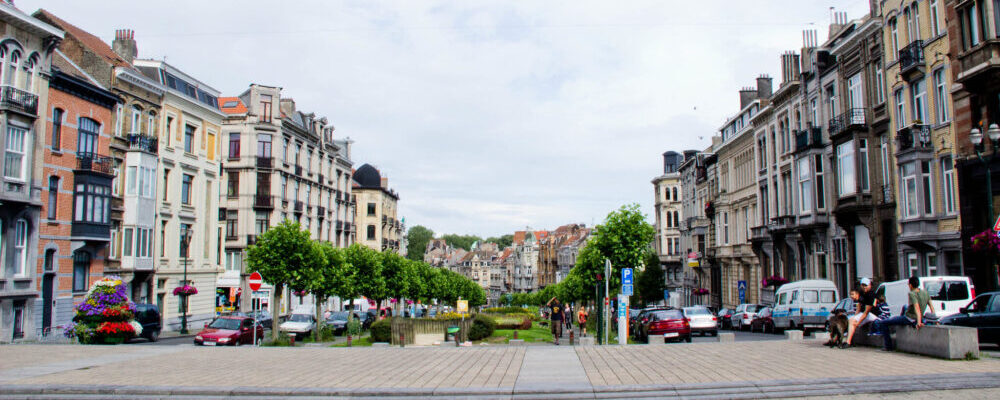
Historically, Schaerbeek became home to the upper classes in the late 19th and early 20th centuries. Avenue Louis Bertranlaan was placed at the heart of a new residential district for the city’s burgeoning middle class. Many homes at that point were designed by renowned names such as Gustave Strauven and Henri Jacobs, who designed and built buildings in the Art Nouveau style.
What’s more, Schaerbeek is home to not only Art Nouveau architecture but also Art Deco styles. As a centre for design homes, Schaerbeek is also the area where Autrique House is located. Built in 1893, this is the first building designed by Victor Horta and is a major part of Brussels’ architectural heritage.
A neighborhood for young people
With more than 130,000 inhabitants, this is one of the most popular districts.
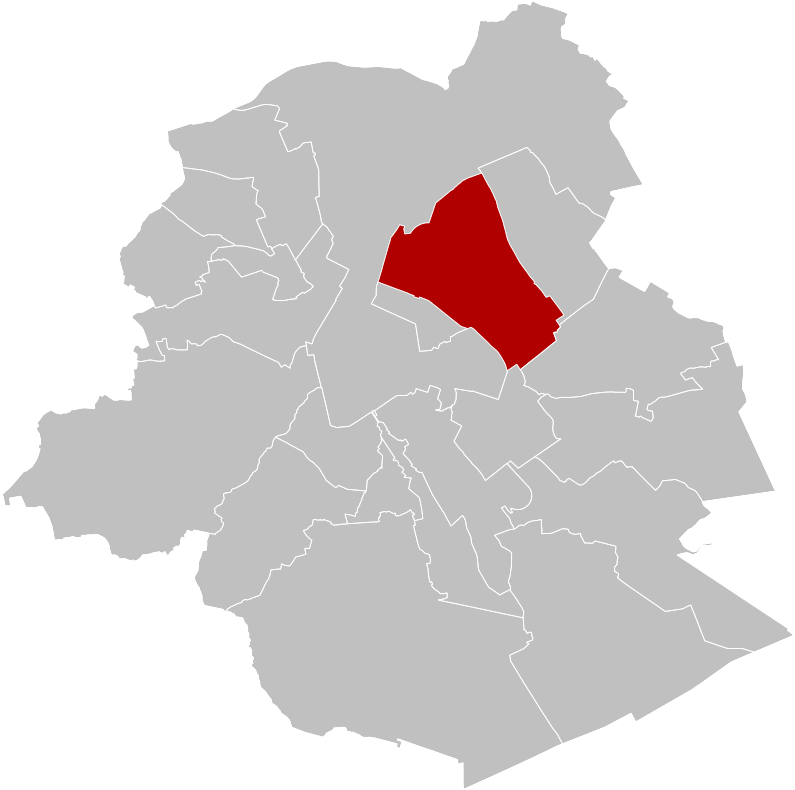
Schaerbeek is located in the northeast part of the Brussels region and is easily accessed by tram and bus. I live along one of the tram lines close to Josaphat Park, allowing me to move freely between the bordering neighbourhoods and the city centre. With the European Quarter not too far away, many young professionals (including me) have found a reasonably priced home in Schaerbeek’s southern or eastern parts.
Personally, I love how everything is within easy reach. The wide streets, variety of schools and the large Docks shopping centre (easily accessible by tram) make it a place with everything a young person may need.
In one direction, I am several minutes away from great cafes and restaurants and in the other, a stone’s throw from the park and a tram stop that directly takes me to the city centre. The neighbourhood is home to more than 140 nationalities including large Turkish and Moroccan communities. As a result, it is possible to find a wide range of cuisines and an amazing mix of cultures.
Food and drink
Some of my favourite local spots include 1030 Café, FoxDen, Winok, 450 Gradi Pizzeria, and Joran – Cidrothèque. Not only do they offer great service but also tasty dishes and drinks. My favourite is an authentic Italian restaurant called La Selva where I’ve eaten some of the best pasta outside of Italy. As expected, the restaurant is run by an Italian family which contributes to the credibility of its mouth-watering dishes.
For those interested in fresh produce, Schaerbeek hosts a market every Tuesday morning starting at 8 a.m. in three locations: Dailly Square, Chazallaan and Grote Bosstraat.
Is there a catch?
As one of the 19 municipalities in Brussels, Schaerbeek often receives mixed opinions with regard to safety, cleanliness and expat friendliness. Its reputation in Brussels is somewhat questionable. One reason is Brussels North Station which is known as a hub for violence, crime and drug trafficking. Locals often describe the surrounding area, particularly around Liedts, as unwelcoming and unsafe. That said, I usually pass through by tram when commuting to the city centre.
By comparison, areas around Plasky, Josaphat Park, and Meiser are considered to be rather pleasant and home to many families and local businesses. They offer a lively yet relaxed atmosphere and a quality of life that appeals to both locals and newcomers alike. In summer, the municipality organises a range of activities in the Josaphat Park including sports, dance classes and food trucks – ideal for enjoying the outdoors.
Language lessons in Brussels
Last but not least, being a resident of the Brussels region provides foreigners with access to low-cost language courses. In Belgium, the official languages are French, Dutch, and German. Living in one of the communes gives any newcomer the opportunity to learn French or Dutch for a little as 30 euro per course. The prices are so low due to governmental support for integration programmes.
While Schaerbeek might not win you over at first glance, it has layers worth discovering and exploring. It may seem a bit distant and unwelcoming at first, but given time and curiosity, it begins to feel like home.
––––––––––
Read more about Brussels here in Dispatches Europe.
Polya Pencheva
Polya Plamenova Pencheva is a young Bulgarian journalist based in Brussels, Belgium. Polya holds a Master's degree in journalism from Rijksuniversiteit Groningen and loves writing and telling the untold stories of interesting people. You can find her dining at cute café, shopping at markets, scouting second-hand shops or just chillin' at home with something great to read.