Oyster Heaven is a Netherlands-based company that builds oyster reefs around North Sea coasts. It is the creation of a British expat entrepreneur. The goal? Regenerating marine ecosystems and distributing knowledge and understanding for the ecosystem.
Oysters truly are ecosystem engineers. That’s what George Birch understood in 2021 when developing the idea to create a company that would grow oysters in a hatchery. Birch’s projects require 40,000 bricks to be lowered onto the sea bed off the coast of the Netherlands, Belgium and the United Kingdom.
Birch hired his first employee in the summer of 2022. He was able to raise $800,000 (U.S.) in capital in only the second year, raising considerably more since then. With that capital, Oyster Heaven has grown into a 10-person team, with four more coming on board this summer.
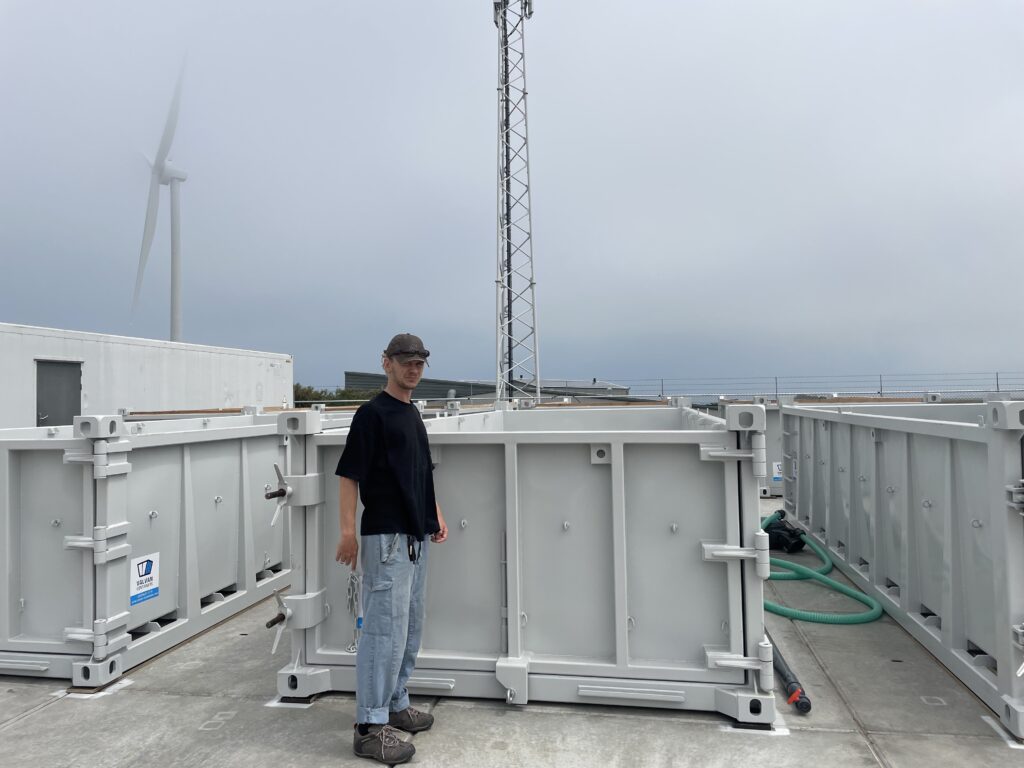
Birch moved to Rotterdam in 2020 for a master’s degree in business administration. After graduating, he contemplated the best place to start his company. Although he has built a vast network in the UK, he has chosen to stay working in the Netherlands as a Dutch resident.
To understand what motivates Birch, you first have to understand oysters.
A day in the life of an oyster
Oysters are not the most charismatic of creatures. Once securely attached to a rocky surface, they can live up to 20 years in the wild. They drink 200 litres of seawater smoothie each day, feeding off microscopic particles in the water and excreting sand, sediment and clean water.
Oysters are facilitators.
They live to create a refreshing, clean environment for other creatures to move into. Healthy reefs sing which attract all kinds of other species. They build living concrete structures on the seabed and are constantly picking up litter in the ecosystem by filtering seawater.
The world is a much better place with oysters, even if they lurk in the background.
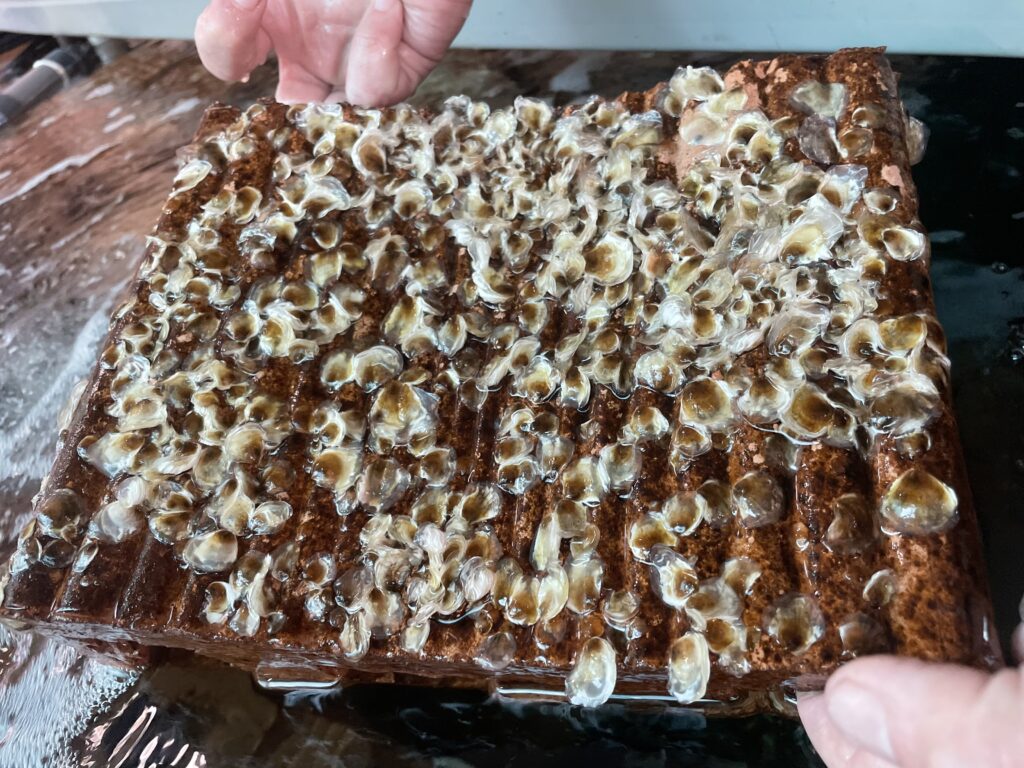
An adult female will produce 1 million eggs, with around 500,000 becoming viable and may be fertilised. The larvae (or spats) look like thousands of tiny black specks swimming around in the water. The eventual number that makes it to settlement is a tiny percentage of that.
When an oyster finally puts its foot down it will never move again. They are a bit more stubborn than clams, which can shuffle and scallops that can swim. Without a hard surface to settle on, they will drown in the muddy sand.
Oysters can be found on many kinds of hard surfaces, reefs, rocks, concrete, boat hulls. At sea they spread out, but prefer to live in a cluster where they have higher chances of survival. They thrive when they can settle on top of each other, eventually building a solid reef and altering dynamics in the water.
Scale of operations
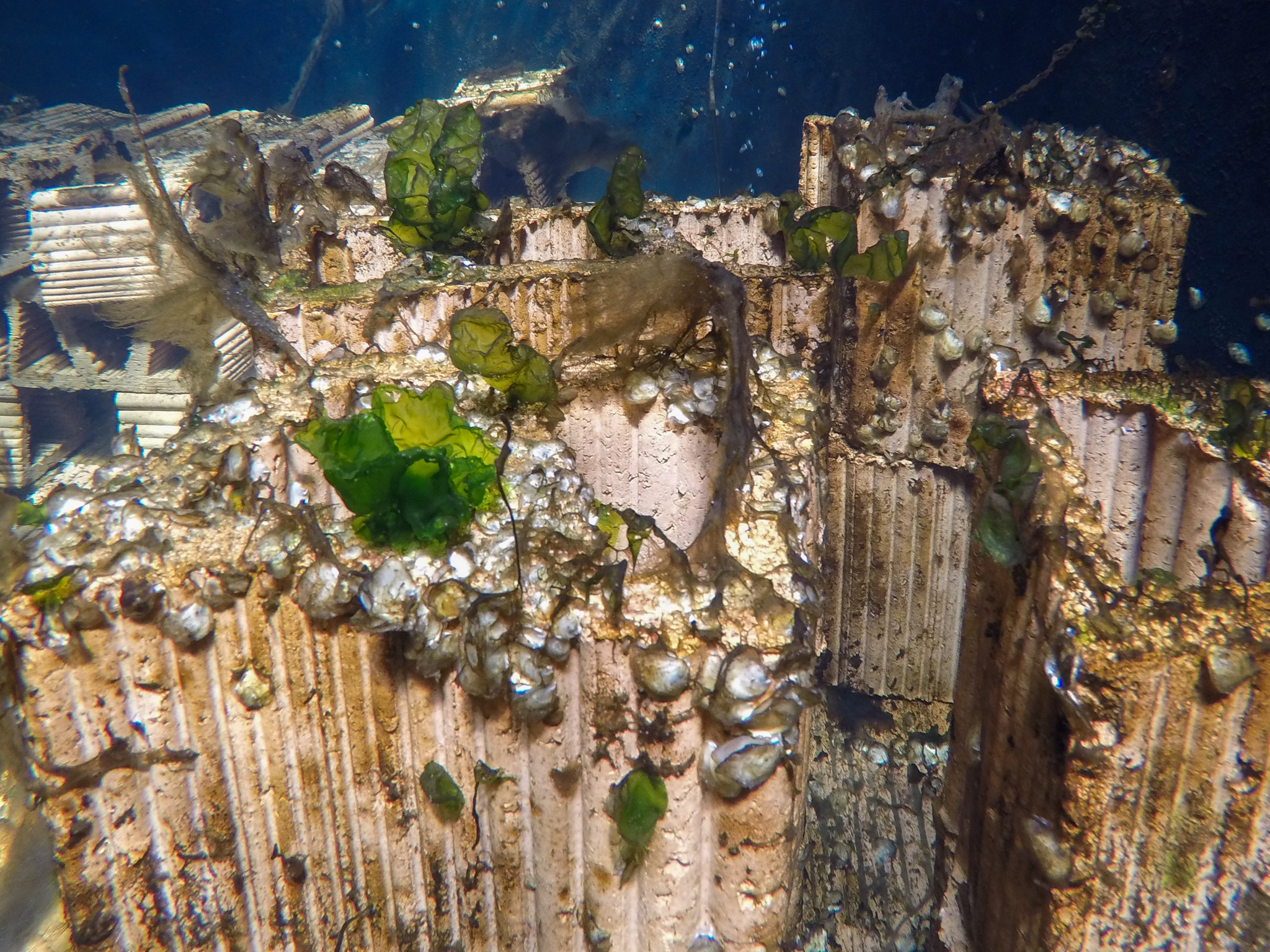
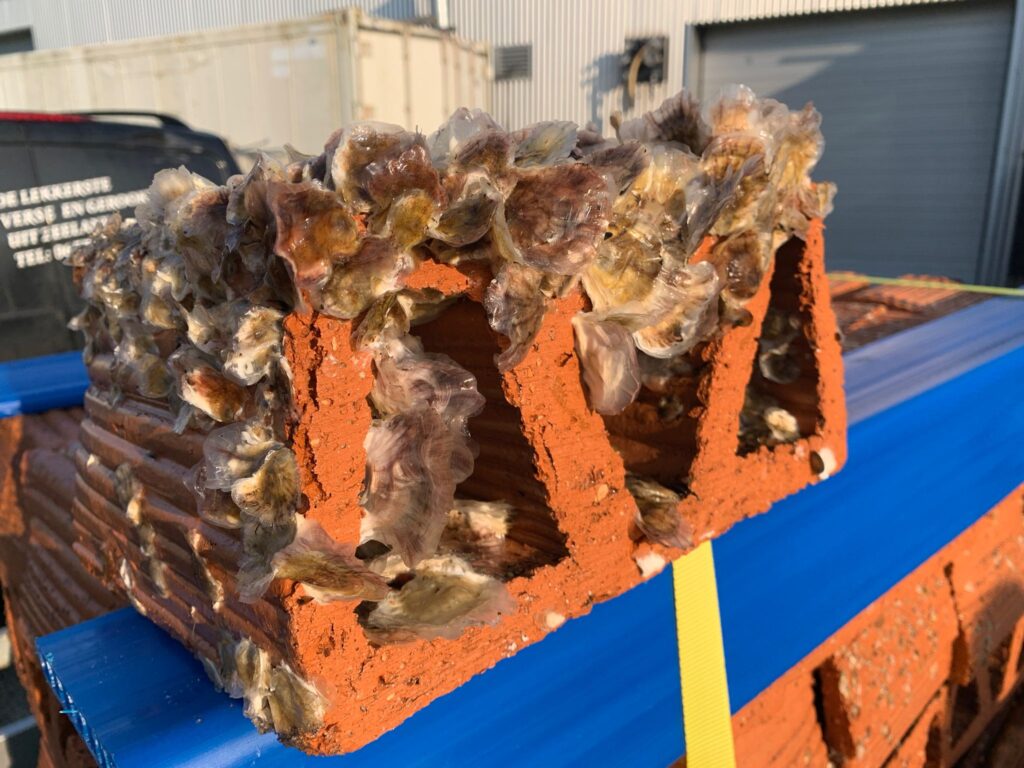
Oyster reefs thrive in numbers. That’s why it’s important for projects to be in high quantities of bricks per reef and oyster per brick. The current scale that Oyster Heaven works with is four million spats, which will ensure that 400,000 will survive to sexual maturity so they can start reproducing. Each pallet contains 51 clay bricks. The bricks are holding on average 100 oysters per brick. One reef has 40,000 bricks which make up the Mother Reef; they are lifted off the pallets and lowered into the water. Over time, these oysters grow over each other and create complex 3D structures in the water.
The quantity of oyster larvae that have grown into healthy oysters in the hatchery have exceeded expectations. This is due to the reliable stream of fresh algae, artistically engineering the optimal conditions for growth and careful monitoring and adapting.
Building a reef
The Mother Reef is made of 100% local clay bricks. Their shape is engineered to optimise surfaces for the oysters to land on and reduce damage caused by scraping.
All of the reef restoration sites are in coastal areas. This is because the costs and equipment needs are lower closer to land for both the placing of the reef and for monitoring its growth and because this is where native oysters thrive best. Arguably there is greater need in coastal areas for oyster reefs as they purify the water and regenerate the coastal ecosystem.
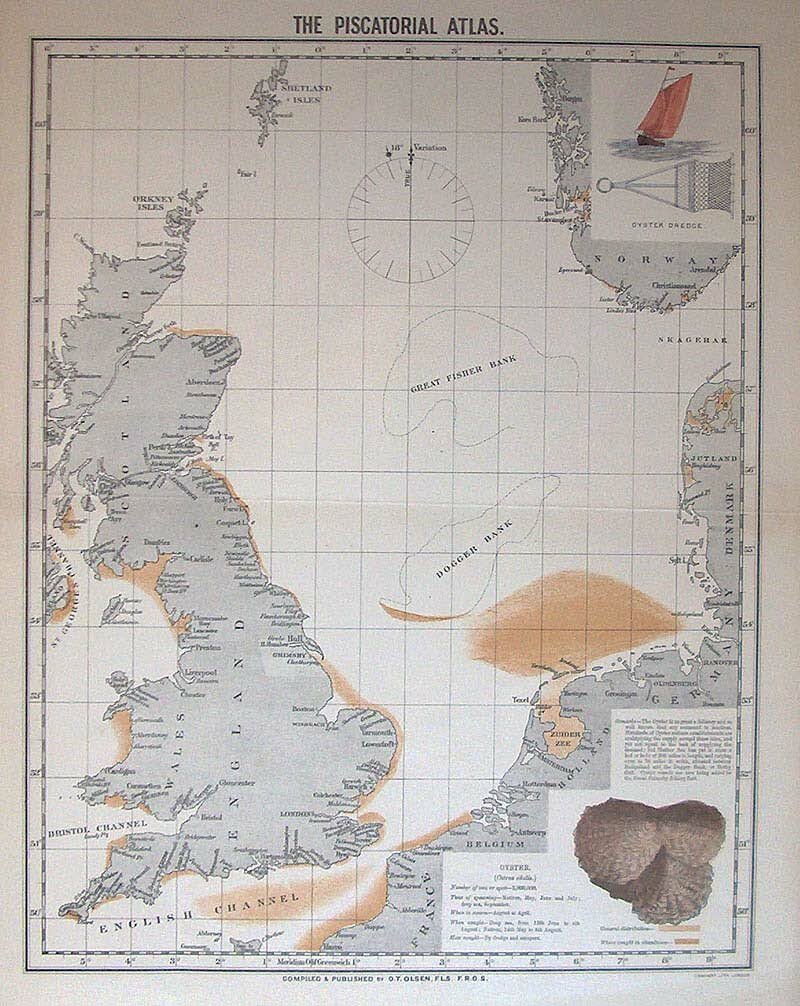
The North Sea shores were covered with oysters 100 years ago. Reefs around the Netherlands made up to 30% of the seabed. As a consequence of human activity, the populations have declined and we see far less wildlife and an increase in the erosion of cliffs and coastlines. The need for public money to be spent on sand nourishment (due to coastal erosion) is a relatively modern problem. People used to speak about beaches covered in oysters. There is a great need for oyster reefs to be replenished with interventions occurring around the North Sea’s coasts and with investment and collaboration with governments, will result in long lasting, nature driven solutions.
They would see fast rewards.

So, what’s stopping a pension fund from investing in our oceans?
It was clear to George Birch early on that the scale of capital he needed to raise for this initiative was far beyond the scale of philanthropy, Go Fund Me or charitable donations.
After graduating from the University of Edinburgh with a degree in marine ecology, Birch worked for a pension fund in London to learn the subtleties of getting institutional investors to invest. The goal was persuade a pension fund to invest in marine conservation.
For a hedge fund to be interested in investing, there are three main requirements:
• Firstly, the proposing organisation must be professional, experienced and legitimate.
• Secondly, the scale/value of the project must be greater than €100 million. This is because of high administration costs and the desire to generate appropriate returns for investors.
• Thirdly, the organisation must be able to prove that it can handle such an amount with a history of successful projects and deliver value so that all owners and partners of the pension fund will be paid. It must generate income with low risk and the project cannot be a pilot.
Finding enough investment for marine restoration will have a real impact on the quality of our oceans.
During the next five years, Birch hopes that reef regeneration projects become more popular amongst different kinds of initiators, allowing oyster heaven to focus more on the development and distribution of tools to design and create reefs. They want to improve software and monitoring tools which can be put in the hands of the coastal communities around the North Sea. The vision is to curate a DIY kit that can be loaded onto the back of a flat-back truck and driven to new reef sites. Simultaneously, they want to share knowledge and connect small-scale projects to large-scale funding through community action.
The service they offer will provide the necessary tools and resources for new projects to happen across coastal communities. They will help to teach and professionalise these organisations and connect with investment streams that will make a real impact on the size of the project.
Selling water quality as a service
The types of companies that can benefit from investing in oyster restoration reefs vary between water enhancement services for companies that want to increase and maintain good value in their supply chain. Oysters help against microscopic pollution. They digest organic particles and sediment. Anything they can’t digest, such as micro-plastics and chemicals, go into the seabed sediment. That means forever chemicals and plastics are slowly embedded in layers of rock sediment rather than floating around in the water column.
Therefore, this project is valuable for the fishing supply chain. Supermarkets and wholesale food chains who want to supply fresh and healthy fish to their customers can benefit from investing in a healthy North Sea. It is also useful for water treatment utilities who manage the whole supply of providing water to homes and the waste water afterwards.
Birch and Oyster Heaven want to work with companies to layer nature into their systems to deliver on higher water quality outcomes. He proposes building oyster reefs in places where the problem exists, in areas of sewage and agricultural outflow. The North Sea remains the focus of investigation with projects in Zeeland, the Belgian north coast, Norfolk, Scotland and Ireland. More projects are in the pipeline.
––––––––––––
Read more about entrepreneurs here in Dispatches’ archives.

Zoë Prifti
Zoë Prifti is a London-born, Eindhoven-based entrepreneur with a background in design. Zoë is new to writing. In her private practice, she works with fish leather and other organic matter under the broader theme of the circular economy.