Zagreb has attracted plenty of expats over recent years. From those employed by one of the country’s tech firms to those seeking life in the city but with the bonus of safety and security, the foreign presence in the Croatian capital is now more evident than ever before. Where do these people live, however, and if you’re planning on making the move to Zagreb, which neighborhoods should be on your radar?
One thing should be mentioned before we dive in, and that is that the entire city is safe. In fact, Croatia is among the safest countries in the world.
Zagreb’s most “dangerous” area (Dubrava), will certainly bring a smirk to the face of anyone who has lived in Paris, London, Berlin, or any metropolitan city. The Croatian idea of “danger” certainly differs to that held by the majority.
Walkable, safe, and dominated by a mix of architecture spanning centuries, Zagreb has an variety of very different neighbourhoods to pick from. Seventeen city districts, to be exact, but I’ll stick to the ones most relevant to expats and foreign professionals, whether you’re looking to settle or are just passing through as a digital nomad.
As for rents, list what someone would pay on average for normal apartments in each section of the city. But there are many different levels of renovations in some of these areas so there will be some outliers that are markedly higher or markedly less. But generally this is what expats would be looking at if not looking to purchase an actual free-standing house.
Gornji grad
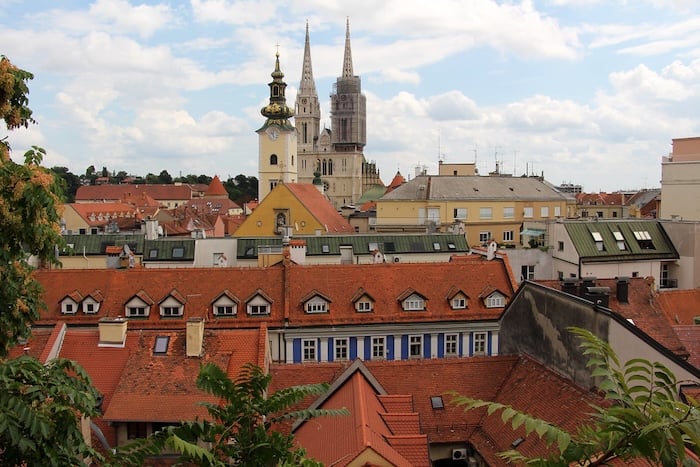
Starting with the most beautiful of all within the city itself, we have Gornji grad (Upper town). Not far from the forests of Medvednica, this historic part of Zagreb is full of cobbled streets, beautiful Austro-Hungarian architecture and a quaint Central European feel. Were it not for the Croatian flags everywhere, you could be forgiven for thinking you’re somewhere in Prague or Vienna.
If you’re more into the character of a place than you are pure convenience, then Gornji grad is likely your best bet. That isn’t to say convenience isn’t on your doorstep (it very much is), but the balance is just right here. It is home to a mix of longtime residents, creatives, expats and more, Gornji grad feels like a much smaller neighbourhood, and not part of a capital city.
International schools can be found here, and it’s an ideal location for families. Prices here are higher than the average, but you do certainly get what you pay for if the character of a place as well as the proximity to the hustle and bustle of the city is at the top of your list.
To rent a place in Gornji grad, you’ll be – on average – looking at 900-1500 euros per month for a typical apartment.

Donji grad
Donji grad (Lower town) is dominated by 19th and early 20th century architecture, the U- shaped network of beautiful 19th century parks known as Lenucci’s horseshoe, and a hefty dose of cultural institutions. Markedly busier and with a more modern twist on it than Gornji grad, this part of Zagreb is often simply called “The Centre”. It has a more urban feel to it, with the city’s blue ZET trams twisting and turning through the concrete jungle like mechanical snakes.
Packed with independent shops, bars, cafes and places to eat, this part of Zagreb is its beating heart.
While families do live in Donji grad, there is a lack of space and gardens, with apartment living being the norm. In that sense, it’s more than ideal for remote workers and foreign professionals who want to enjoy the “big little city” atmosphere that Zagreb so perfectly provides.
For Donji grad, plan on spending 850-1500 euros per month for a typical apartment, basically the same as Gornji grad.
Novi Zagreb
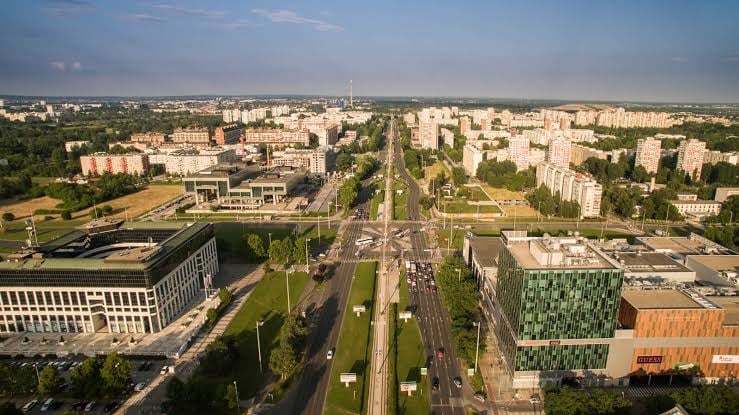
Novi Zagreb, or New Zagreb, is an area of the city that expanded beyond the original reaches of what was initially intended as the population grew. More modern and with a decidedly newer layout plan, many argue that Novi Zagreb is actually among the best places in the city for expats and foreign professionals. Don’t be fooled by its Soviet-style brutalist architecture. It is certainly reminiscent of a bygone era, but the apartments inside are ultra- modern, flooded with natural light and very spacious.
The entire area of Novi Zagreb appears as if designed around greenery, parks, bike paths and jogging trails. Being just south of the Sava River, there’s very easy access to popular natural areas like Bundek and the Sava embankment itself. Being just outside of the beating heart of Zagreb doesn’t mean Novi Zagreb is lacking in public transport links or amenities. The area is served regularly by reliable bus and tram links, and large shopping centres like Avenue Mall are a stone’s throw away.
If you’re someone who travels frequently, either for pleasure or business, Zagreb Airport is close by. In addition to all of the above, parking is generally easier than anywhere else in Zagreb, and affordability is still a draw here. Rent costs all over Zagreb (and Croatia) have shot up and it is a serious problem, but Novi Zagreb is still managing to hang on to its affordable reputation, without needing to sacrifice convenience.
Rents in Novi Zagreb it range more broadly than the above areas at 650-1500 euros per month, with 1500 euros being the really upper end.
Tuškanac, Gornje Prekrižje and Pantovčak
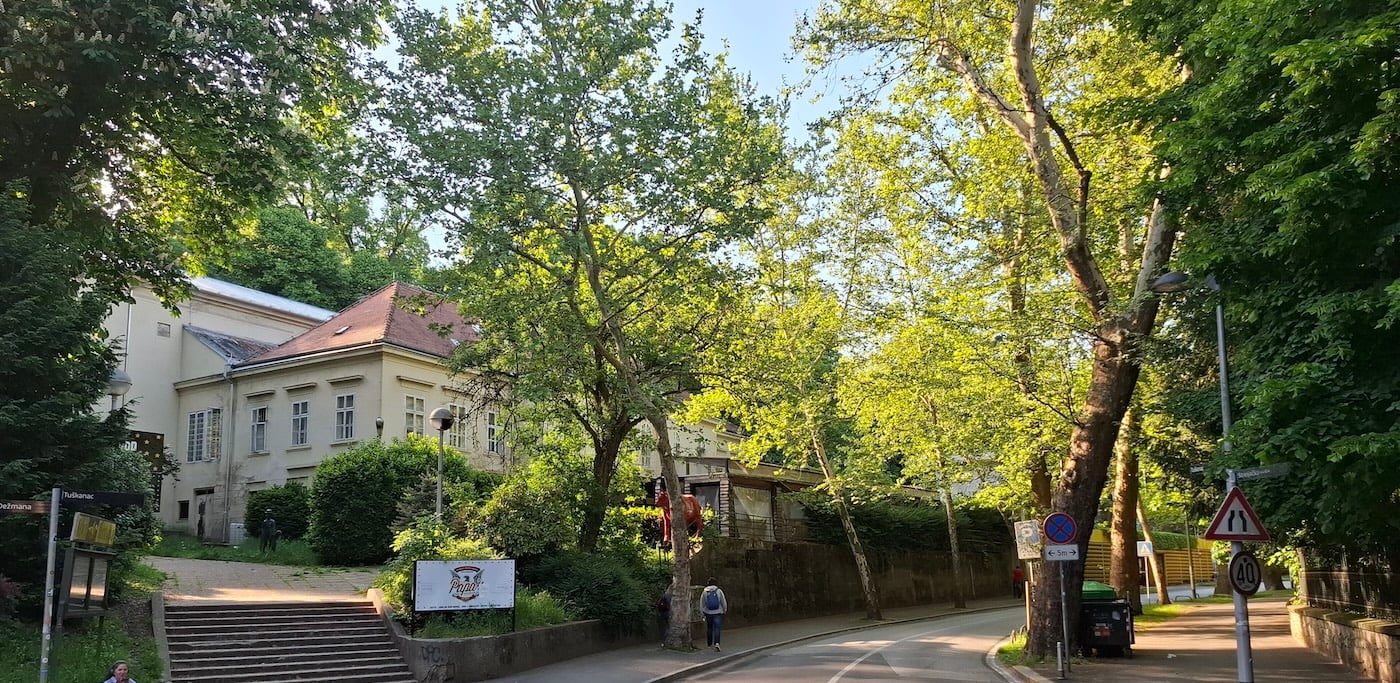
If you’ve got deep pockets, this part of Zagreb, known locally as the city’s green jewel, is your best bet. Located away from the hustle and bustle of the city yet close to it, this area has an exclusive feel to it. I mentioned Croatia’s rent costs increasing, but this is still known as the home of some of the highest property prices in the country.
If you’re looking for complete privacy, convenience without the irritation that often comes along with it, gardens, plenty of massive, established trees and spacious properties that aren’t limited to mainly apartments, then this is your ideal starting point (and likely end point, too). This area offers sweeping views of the sprawling city below, with Medvednica, untouched
nature and mountain activities behind you. You’d find yourself in a certain sort of company here, particularly in Pantovčak, as you might bump into the Croatian president himself. His residence is here, as are many embassies, the homes of various diplomats and business owners.
Tuškanac rents are unlikely to be less than 1,000 euros per month, and range from 2,500 to 3,000. Gornje Prekrizje rents range from 1,500-3,000 or 4,000-plus per month. It’s a difficult area to price as everything is very individual there but that’s the average based on current listings in that area. Pantovcak rents rang from 1,000-2,000 euros per month.
Zagreb has something for everyone
I referred previously to Zagreb as the “big little city”, and it truly is. There is so much packed into a relatively small area with less than 800,000 people living in it (if the 2021 census is to be believed). For expats, there are an array of areas to be explored, all of which are easy to reach and easy to travel between. Be it a touch of classily dated Austro-Hungarian glam you’re after, a grand residence with an expansive garden, or perhaps an ultra-modern, glassy apartment complex with panoramic urban views, or maybe something in between, Croatia’s quirky capital certainly has it.
International schools, co-working spaces, an increasing foreign presence and a high concentration of well known companies can be found here, not to mention a blossoming startup scene that draws more and more international professionals to Croatia each and every year.
––––––––––––
Read more about Croatia here in Dispatches’s archives.
See more from Lauren here.

Lauren Simmonds
Lauren Simmonds is the editor of Total Croatia News, the largest English language portal in Croatia. She lives in Zagreb, Croatia, and is a translator, content writer, interpreter and the co-author of "Croatia - A Survival Kit for Foreigners," which was published in 2022.