
(Editor’s note: This edition of the Eindhoven Business Briefing is part of our Tech Tuesday series. Dispatches covers tech because so many of our highly skilled internationals are founders, engineers and investors.)
Ah, the holiday season is almost here … time to fly off to Austria or Switzerland for a few weeks of Christmas and New Years’ skiing and relaxing. Then comes Carnaval below the rivers followed by Easter, spring break, summer holidays, fall break and finally there we are, right back again at Christmas.
We’ve had some surprising conversations with Dutch founders lately. Several we’ve talked with concede the work/life balance is so wildly out of balance that it’s unsustainable for startups. In the old days, startup founders tended to write off the truncated work weeks and endless holidays as the price of doing business in the Netherlands. And it was hard to argue with them. The Netherlands produced the one unchallenged tech monopoly in Europe (if not the world), ASML as well as global tech leaders such as NXP and Axelera AI. But global competition, along with Europe-wide trends, is closing in. One founder paraphrased Dutch Prime Minister Rob Jetten, saying the Netherlands had “raised the floor, but lowered the ceiling,” upping the benefits while cutting productivity at a time when trends are converging.
On Saturday, the New York Times had a post about how the unrest sweeping Europe is really about young workers versus old retirees. “As Europeans live longer, should the needs of the young be eclipsed by their parents’ and grandparents’ pensions, routinely the largest items in Europe’s national budgets?” asks reporter Jason Horowitz in “A ‘Generational Clash’ Is Fueling Europe’s Protests.”
Trend No. 1 – Aging populations are increasingly drawing off the money that should be spent on infrastructure and social programs through their pensions. Those pensions were negotiated by union leaders who knew politicians had to fund them to keep voters loyal. One of the biggest differences between the United States and Europe is that employees in Europe work less and retire earlier.
Trend No. 2 – For many, the Dutch work week ends on Thursday. Workers in the Netherlands between the ages of 20 and 64 worked an average of 32.1 hours per week in 2024, according to a 2025 analysis from Eurostat. Workers in the U.S. work till their bosses tell them they can go home. In the States, every job I ever had was based on a minimum of 45 hours, and most required between 48 and 60, with weekends set aside for business meetings.
Trend No. 3 – Most Europeans are eligible to retire at 65 and 60 in Poland. In the U.S., there is no official retirement age, although you receive full Social Security benefits at age 67. But I always point out that Bob Iger was 71 years old when he returned to the CEO’s position at Disney.
That’s the conventional world.
In the startup and tech world, the rules are completely different: There are no rules.
Here’s what you’re up against, Europe:
If you want to work at Khosla Capital as chief of staff for Sand Hill Road VC Vinod Khosla, you have to be available 24/7, the Wall Street Journal reports. The position has no specific hours requirements but the 71-year-old Khosla is quoted in “The Silicon Valley Job That Demands Three Years of 24/7 Hustle” as saying he works 80-hour weeks “and this person needs to keep up.”
Silicon Valley and Wall Street have always been known for demanding endless hours of employees (and bosses). But the AI era is pushing the tech industry’s work ethos to its limits, report Katherine Bindley and Chip Cutter. The AI founders code for this make-or-break approach is “9-9-6,” work from 9 a.m. to 9 p.m. six days per week, Bindley and Cutter write. The WSJ quotes a Khosla spokesperson as saying the firm expects more than 1,000 applications.
If this job were in the Netherlands, we’d expect zero applications because let’s face it … people here have their vacations booked far in advance. And no one here sees the value of working themselves to death. Maybe there’s a happy medium … but the question is, how much downtime can Europe afford and still maintain its affluence?
– Terry Boyd
Will NVIDIA issues blow back on ASML?
Speaking of ASML, the world’s most valuable company (well, what was the most valuable) by market capitalization connects directly to Europe’s most valuable company. Nvidia, who’s founder/CEO Jensen Huang resigned last week, relies on ASML, which makes the most advanced AI chips possible via its EUV tools. Nvidia doesn’t actually make anything. They outsource chipmaking to fabs at TSMC and other suppliers.
Which is where ASML comes in.
Should Nvidia unravel, the demand for ASML’s 400 million euro machines at fabs worldwide would slacken just at a moment the company is beginning a huge expansion. The Dutch company has always wanted more flexibility in selling to China, only to be stymied by American regulators over security concens, With speculation that Huang was involved with a Chinese spy and allowing advanced AI to flow to China, look for the U.S. to tighten restrictions on chip exports … which could cut ASML revenues.
However, the bigger question is, “Does having a few billion dollars transform AI nerds into irresistible love gods?” If that’s the case, Europe will have no trouble filling up its engineering schools.

Eindhoven still has photonics
Even if the silicon-related biz slows, Eindhoven will always have photonics.
Perceptra, an integrated photonics startup based in The Valley (Sunnyvale), has opened its European subsidiary, Perceptra Technologies, at High Tech Campus Eindhoven. Perceptra is relocating its integrated photonics R&D to the Netherlands to join the PhotonDelta ecosystem.
Spun out of MIT by two brothers (Amir and Ata Atabaki along with Daniel Kramnik) and backed by several U.S. government agencies, Perceptra builds photonic chip-based Raman sensors for real-time molecular monitoring and chemical analysis of materials and biological samples with its sensors requiring tiny amounts of whatever you want to measure. Applications include medical, biomanufacturing, military, illicit drug interdiction and other uses all the way to analyzing samples on Mars.
Why Eindhoven? “Eindhoven is where everything comes together for us: integrated photonics, top engineering talent, companies like ours, and the industries we serve, from biotech to security. We can hire the best people here and still stay close to our customers,” Amir Atabaki told Invest in Holland. And full disclosure … in digging up info on these guys, we saw our pal and Eindhoven supporter Sander Arts in the photos related to the raise. Sander, who’s Dutch, connects everyone from The Valley to Eindhoven.
Perceptra got a 1.2 million euro investment from PhotonDelta, and the Eindhoven office will develop photonic sensor chips and complete sensing solutions for customers throughout Europe.
This is an example of how economic development agencies can change the game. Perceptra founders connected with Brabant Development Agency (BOM) officials and the Netherlands Foreign Investment Agency (NFIA) early this year. That initial meeting opened conversations about a European presence. Then, Perceptra won PhotonDelta’s Global Photonics Engineering Contest, and next thing you know, they’re at HTCE.
Perceptra’s chips are made and packaged with partners in the Dutch and wider European photonics ecosystem, including LioniX International, PHIX Photonics Assembly and imec.
Hessel Mittelmeijer and the Valley of Death
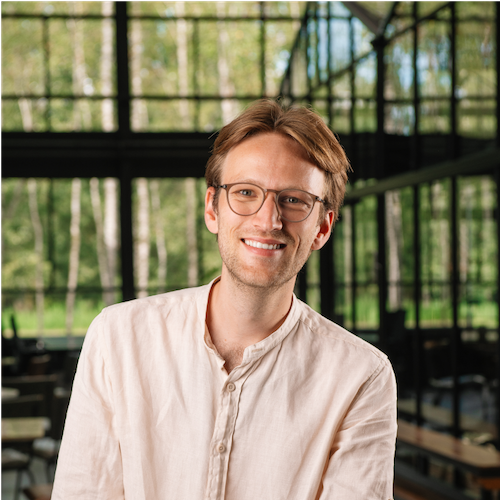
It’s kind of weird, but nice, to see people we know shaping the future of tech in Eindhoven. Today, Hessel Mittelmeijer will defend his PhD thesis at Eindhoven University of Technology (TU/e). We know Hessel as an investment manager at DeepTech Capital Partners (formerly DeepTechXL) in Building 27 on High Tech Campus.
Hessel’s thesis addresses “the valley of death,” the juncture where Dutch startups run out of subsidies and grants before they go revenue positive or generate any revenue.
BOM has an interview with Hessel on their website in which he asserts the issues of market traction and proof of concept aren’t the problems. It’s that early stage investors don’t understand the technological complexity faced by startups. “We often see that investors either lack sufficient in-house expertise or still consider the risk too high and so wait until there is commercial traction to prove that a technology is promising.
“That makes this a particularly difficult phase for startups to navigate.’’
Hessel says the most important thing is that the company has unique and defensible IP and that it solves a problem in the market. But that doesn’t seem to matter to most investors here. How many times have we heard founders tell us that VCs in the Netherlands don’t invest until a startup has revenue. Sigh ….
It’s like Europe wants to fail, then blame it on the startups. We hate to keep bringing this up, but the mantra of American risk capital – from Don Valentine and Apple to Andreessen-Horowitz and Paris-based Mistral – is get in early and get rich. By the way, DeepTech Capital Partners has a fund with a total size of 118 million euros, with 11 portfolio companies.
Briefs:
• Think has a think piece about how the European suppliers are selling Americans companies more AI infrastructure – servers, transformers and cooling equipment – in the rush to build out data centers and power plants yet have a shrinking share of the overall market.
• Eindhoven-based Salvia BioElectronics has implanted its device in the first U.S. patient in RECLAIM-II, a large clinical study of its MySalvia system. Two ultra-thin implants sit just beneath the scalp, one at the forehead and one at the back of the head, and target nerves involved in migraine. Patients switch on the therapy twice a day with the push of a button on a small wearable. The trial will enroll 150 people with hard-to-treat migraine — those who have already tried several treatments without relief — at more than 20 sites across the U.S.
• Dealroom is reporting Defence tech VC funding is now the fastest-growing sector in European venture capital. The State of Defence Tech 2026, produced with Resilience Media, covers record funding, Munich’s rise, the growing role of U.S. investors, talent pipelines and procurement.