(Editor’s note: Angelique Basten, owner of Expat Housing Center, is a licensed real estate agent with a construction background. Dispatches receives no remuneration from this post.)
Whether you’re buying or renting in the Netherlands, you’re going to get an education. The real estate mania of the past few years seems to be cooling, with fewer instances of over-bidding and more units on the markets in major metropolitan areas. But driven by politics and the Netherlands’ – particularly Eindhoven’s – booming tech sector, there are more and more expats coming in to snap up new construction and existing housing.
We turned to Angelique Basten at Expat Housing Center in Eindhoven for a seminar exploring how to buy a house in the Netherlands, or to find a rental before you buy.
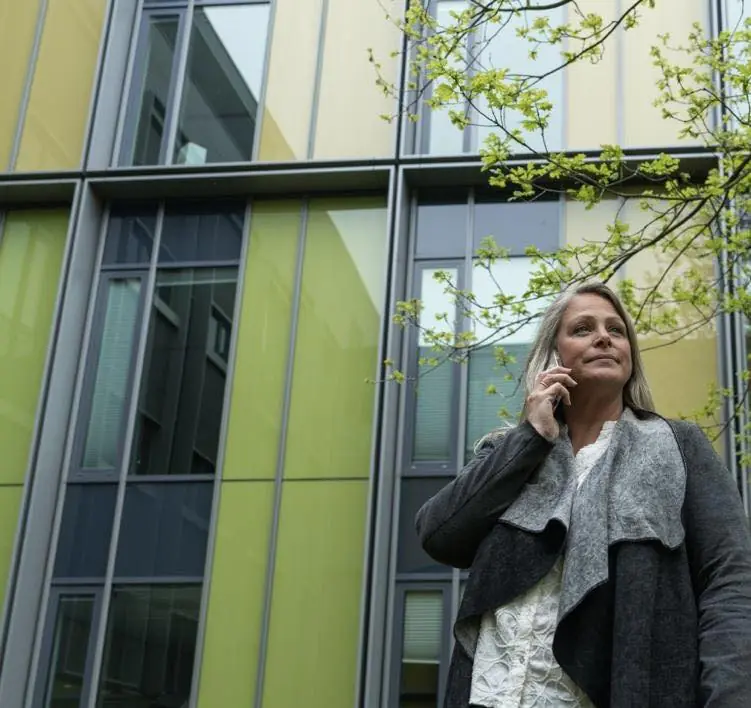
Dispatches Europe (DE): Let’s start with buying. I’m just going to ask you to walk me through the purchase process, starting when you go online and you see a house. You like the house. Then, for instance, will Realtors show you the house? What do you have to do to get them to show you a place you like?
Angelique Basten (AB): It’s not always that the house is online. A lot of the times the house also comes through my network. And that could be before it goes on the market. Also sometimes, when a house has been sold and the buyer wasn’t able to obtain a mortgage, the agent rings me and he says, “Hey, I don’t want to go back on the market. Do you have a client?”
Then you can make a really nice deal.
DE: So, there are other ways, other than just going straight to the websites to find your dream house.
AB: Absolutely. When they’ve seen a house, whether it’s through me or whether it’s through the agency, they can arrange a viewing by calling the agency, and then they view the house. If I can join them, I will join them. If not, then I will fit in a viewing later on in my schedule. And if they say to me, “Well, I love the house, I want to make an offer.” We’ll sit down and we’ll make a strategic plan.
And I educate people, so I tell them what to look for in a house. So, for instance, I have a client now, and he likes to look at shiny houses that are perfectly renovated. I tell him, that’s fine, but it means that you buy the best house in an okay street. That house has already reached its maximum potential. That also means that your return on investment won’t be as high. So, I educate them, in a way, how they can maximize their return on investment.
Proof of income and financing
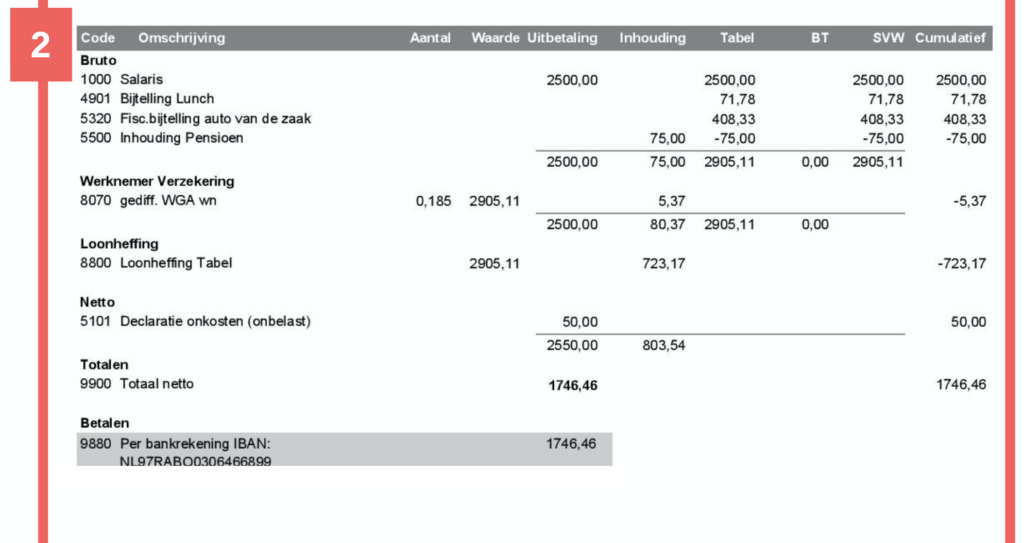
DE: From our experience relocating to Eindhoven, I know sellers and agents are going to want proof of income. What do I need to have in my little folder before I go see the house?
AB: It depends on your situation. Let’s say that you are coming here from America on the DAFT visa, and you don’t have any income, though that’s a very specific situation. If you can show that you have continuous income from the States in the form of obligations or in the form of stock or pay or something, that makes it easier. But oftentimes you rent on the basis of savings. There are more and more agencies that are flexible in terms of that. If it’s anything above 50,000 euros, then they can be flexible.
If it’s anything under 50,000 euros, then that’s very unlikely that you would be able to find something.
But overall, any property manager would like to see a contract, an employment contract and then fixed. So, if it’s a flexible contract, like a phase, a contract where there is no fixed amount of hours or no fixed amount of time, then it’s not possible to rent.
It depends on the agent but also depends on the owner. So, if you have a small agency that works with people like you and me that have an extra house, then it could be that they’re more open to to discuss. I think on average, it’s anywhere between one-to-three months that you have to pay in advance your rent. You also pay in advance. So, let’s say that you would rent for the month of November, then on a first of November, you need to pay your full month’s rent.
DE: On the purchase of a house, and let’s just say a million, because that’s the easiest one to figure what percentage of that sale price, what am I going to have to come up with to buy the house?
AB: In the Netherlands, you have a loan-to-value rule of 100 percent. That means if you buy a house with a mortgage, you could mortgage 100 percent of the value of the house. Now, the value is not the asset price. The value is not the transaction price. An independent third party comes and values the house. Let’s say that house is on the market for a million, and you offer 1 million, and I can value it at 980,000 euros, then the valuation is 980.000. Your mortgage will be 980,000 and then you need to pay the difference plus your cost for the buyer. If I can value that at 1,000,300 euros or something like that, then that’s the value that you can mortgage. In that case, it’s no problem. You value the full amount. You mortgage the full amount of your purchase but you will still be stuck with the transfer cost. The transfer cost, on average, is about 5 percent of the purchase price if you pay transfer tax.
The notary is your friend
DE: What about renting?
AB: If you look for a rental property and you ask me, “I’ve got a contract and I earn X amount of money, how much can I spend on a rental property?” The average you can spend is one-third of your gross monthly income.
DE: Who pays the real estate agent?
AB: The selling agent is paid by the seller. The buying agent is paid by the buyer.
DE: Is there a closing here like there is in the U.S.? So, when we bought properties, we’d have to go to the bank. The seller’s attorney and the seller would sit on that side of the table. We’d sit on this side of the table. They require a registered check for closing costs to seal the deal, and then, you know, the deal was done. Is that similar to here?
AB: Fairly similar. We go to the notary. So, the notary is an independent third party that is allowed to transfer the title. You should see them as a lawyer with a degree times four. So, they’re very heavily monitored by our government in terms of ethics. They are not allowed to have any debt themselves nor can their family or any criminal history.
DE: Wait. What do you mean? The notaries can’t have debt themselves?
AB: They can have a mortgage but can’t be listed in the Bureau of Credit Registration in a negative way. They have a special third-party bank account in which the bank will deposit the mortgage, and then the notary is authorized to pay off the mortgage that’s still on the house from the sellers and too easy to dip your hand in. And if you have debt, then you’re vulnerable.

Then there are immigration regs ….
DE: And so when all that happens, you can generally take possession of the house immediately?
AB: No. In the Netherlands, when you buy a property first, within the first six weeks after you sign the agreement, you pay a security deposit of 10 percent, or you can choose a bank guarantee through your mortgage provider, and then the rest of the amount should be in the account of the notary before the transfer. Five days before the transfer, everything is paid, you do a final inspection on the same day, just to make sure the house is in a good condition. And then on the same day, you go to the notary, you settle, and you sign all the official documents. Then directly you get the keys.
DE: Can I send my attorney or my representative here to do the whole deal to buy my house?
AB: What you can do is you can get a power of attorney, but you would need to physically go to the notary to sign the power of attorney, show them your identification, sign off. Or you would have to go in the United States, get a notary or an attorney there, get the power of attorney and send it there.
DE: Can I pay cash?
AB: The most asked question I get from Americans when they want to buy property here in the Netherlands is, “Can I get a mortgage, or can I pay from savings?” And “What’s the IND (Immigration and Nationalization Service) process that aligns with that?” You can only get a mortgage if you can show form of income. If you have continuous income from the States, then most of the time you would be able to purchase if you can demonstrate that. But the implication is you need your IND approval. The IND approval is necessary because you need your burgerservicenummer, or Dutch social security number, to actually apply for the mortgage. You can only get your IND process started when you have an address where you can register. So, it’s a chicken egg story.
If you buy from savings, you could absolutely, as a foreigner, buy a house here in the Netherlands, but you need a social security number, and you need it within three months.
So, as soon as you’ve got your purchase agreement or rental agreement signed, you can then go online to the IND and put your application in and then, when you come here, you can make sure it’s finished.
As a real estate agent, I have to see if you have the money ready and available in your bank. And I think that’s a difficult concept for a lot of Americans, because they believe they have equity available, for instance, in their house. No, no, it needs to be IN the bank, and I need to physically see it. I also have a duty as a real estate agent to do a check on my clients. It’s called the WWTF, the Money Laundering and Terrorist Financing Prevention Act.
It’s for money laundering reasons. Then, when you go to the notary, they have a more heavy obligation to thoroughly check you again. Let’s say that you got money from your auntie. They would even want to check the auntie to check where her money comes from.
We have a lot of clients here that, you know, maybe Indians or people from an Asian background that have money from several relatives. Every single relative is checked. So, if it’s money that comes from underneath the mattress, for instance, then that person isn’t able to use that money.
DE: What about housing quality. Are there houses from a certain period I should avoid?
AB: Everything has to be built in accordance with the bouwbesluit law. And if it doesn’t come through that check, then it’s not built. very, very pleasantly, especially when I explain to them how houses are built here. So everything we build, we build according to the law we call bulbous light.
So I know when I look at a house from the 50s, 60s, 70s, what the condition is of the pipe work, how everything runs in the walls. They are extremely positively surprised. The caveat: You should be cautious in places like Amsterdam and Rotterdam where they build on turf. The soil may be unstable leading to foundation issues.
–––––––––––
See more about housing in Europe here in Dispatches’ archives.

Co-CEO of Dispatches Europe. A former military reporter, I'm a serial expat who has lived in France, Turkey, Germany and the Netherlands.