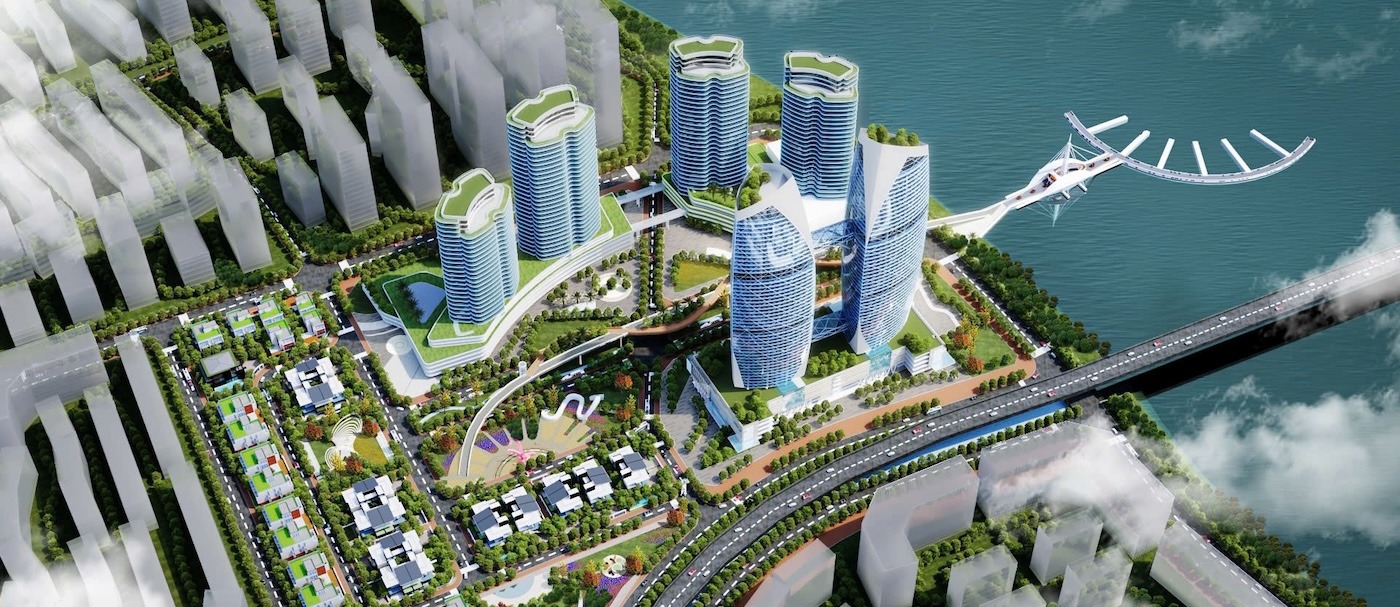
(Editor’s note:This post on Da Nang International Financial Center and its fintech efforts is part of Dispatches Tech Tuesday series. Dispatches covers tech and promotes the global mobility of talent.)
When we think of international financial centers in Asia, cities such as Hong Kong or Singapore usually come to mind. Few would think of Da Nang City. Yet in January 2026, Vietnam launched an International Financial Center (IFC) in Da Nang City. Instead of trying to follow in the footsteps of foremost financial hubs in other countries, the IFC in Da Nang is designed as a testing ground for digital finance, green finance and new financial models, with focuses on international connectivity, innovation and sustainable development.
For international professionals, Da Nang’s IFC offers new opportunity, chance to shape roles and career paths in different way, especially in finance and technology. This is part of the country’s official economic policy of encouraging financial growth and transforming Vietnam into a high-income country by 2045.
What is the IFC?
International Financial Centers bring benefits to a country’s economy hubs for leading financial institutions, stock exchanges and banks. These centers provide dynamic ecosystems to connect domestic markets with global capital, talent and innovation.
Da Nang’s IFC strategy
In comparison to other countries with one center, Vietnam is pursuing the goal of establishing two international financial centers: one in Ho Chi Minh City, and another in Da Nang City. At present, the center in Ho Chi Minh City IFC will focus on traditional market such as banking, asset management, capital markets, fintech and derivatives trading.
Meanwhile, Da Nang’s IFC specializes in green finance, digital financial services and control pilot projects in crypto assets. The center will leverage the city’s existing technology parks, logistics and port infrastructure to support its activities, aligned with environmentally sustainable development goals. The separate function of the two centers allows Vietnam to modernize the financial system without burdening existing institutions and infrastructure.
In Da Nang City, the IFC’s strategy supports developing the city into a major socio-economic center of the country and the region.
Da Nang’s IFC: A center built for digital and sustainable finance
The IFC in Da Nang is being crafted as a modern ecosystem where finance and innovation intersect. The center reflects Vietnam’s effort to combine financial development with the country’s broader goals of innovation, technology adoption and sustainable growth. Da Nang’s IFC is intended to pioneer in deploying digital asset products, electronic payments, specialized trading platforms, fintech solutions and third-party services to complement the traditional financial market. It also emphasizes green and sustainable finance by issuing green bonds, developing ESG-linked investment products and promoting next-gen supply chains. Besides, the center will play a key role in supporting fintech startups in implementing their ideas through licensed sandboxes.
Beyond that, IFC Da Nang aims to build a favorable and stable business environment that meets international standards to attract both domestic and international experts come to live and work. The center will cooperate with relevant agencies to develop and submit authorities to establish a clear, tansparent, and stable system for organizations and individuals in long-term investment and business plans, enhancing the capacity to attract high-quality international human resources. Large international institutions and corporations are also encouraged to open their own academies in Da Nang City and accept trainees to meet demand for skill enhancement.
Career opportunities for international talent
International professionals can find openings across digital banking, fintech, sustainable finance, and financial technology. Career paths are more flexible and diverse than the traditional hubs, from maintaining existing systems to designing new ones such as digital payment platforms, or developing green financial products.
The early stage also gives professionals and experts more room to take on and shape their own roles. Further, the city’s high quality of life at lower living costs (compares to Hanoi and Ho Chi Minh City), rapid connectivity with international airport, seaports, and strategic transport corridors with ready infrastructure commit a feasible destination not only to work, but also to build long-term personal life.
What about the challenges?
Besides opportunities, some challenges still exist. The center’s rules and regulations are still developing and the ecosystem is young. Experienced talent, support services and established networks are still growing, which means international experts need to be more hands-on at the beginning to support the government in giving advice, building processes and training domestic human resources.
IFC requirements are significant:
VIFC-DN requires applicants to be graduates from universities ranked in the Top 50 (for Bachelor’s degrees) or Top 100 (for Master’s and PhD degrees) on reputable global rankings. Applicants must have a minimum of 5 years of experience, with a particular preference given to those who have worked at international financial centers worldwide or at financial institutions and multinational corporations listed in the Forbes Global 2000 2025. Applicants must be proficient in English.
Expats seeking chances here should be prepared to work across cultures, build local networks with regulators, partners, and domestic teams. A flexible mindset is also essential, because the IFC is a new environment in Vietnam and is still forming. Pure finance knowledge is needed, but cross-disciplinary skills—especially at the intersection of finance, technology, regulation and sustainability—will help expats adapt faster and create more value to the system.
Last but not less, researching visa options, tax implications, costs of living and healthcare policies regarding expats in this developing country is as important as career opportunities.
Huyen K. Nguyen is a freelance travel writer based in Hanoi, Vietnam, specializing in travel, food, and lifestyle. She spent eight years working in the international hospitality industry at five-star hotels before turning to writing full-time. Her articles and translations have appeared in several Vietnamese online publications. With a passion for storytelling, she brings cultural insight and personal experience to every piece. In her free time, she enjoys traveling, reading, and photography.
Receive the latest news and updates from Dispatches Europe. Get lifestyle & culture, startup & tech, jobs and travel news dispatched to your inbox each week.