Congrats art loving expats in Europe … you have chosen well. Wherever you are, you have easy access by train or car to the world’s great museums where you’ll find the world’s great works of art. For many of Dispatches’ lists of the best whatever, we say “across Europe and beyond ….” For this 2026 list of the best art exhibitions, Europe stands alone in its cultural hegemony and influence.
Twenty twenty-five was a standout year in all of Europe”s art centers, with important exhibitions from Bilboa to Basel. Just about every genre from Impressionists to unclassifiable (we’re talkin’ to you, Gerhard Richter) is or was on display in our art palaces including the relatively new Foundation Louis Vuitton in Paris.
This is the update where we take you deep into the fall/winter art season, then into 2027.
So let’s take a moment to check out what’s scheduled so far:
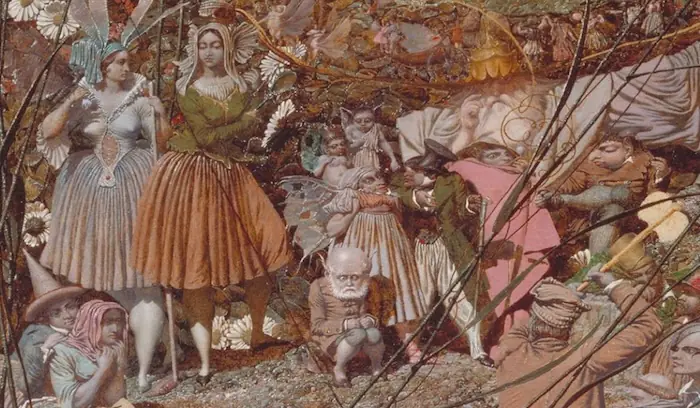
Richard Dadd: Beyond Bedlam
Now thru 25 October at the Royal Academy of Arts in London
Okay, it’s a given that a lot of the greatest artists were crazy as loons, from Michelangelo to van Gogh. Richard Dadd, though, may top the list of unstable geniuses.
Dadd was a promising art student when he killed his father, cutting his throat during a psychotic episode. Losing his grasp on reality turned out to be a great career move, and he spent the rest of his life in various institutions, painting incredibly detailed images of a world only he could see. It’s a world of fairies, dwarves and fantastic settings that inspired Angela Carter’s 1979 radio play Come Unto These Yellow Sands, and Queen’s 1974 song The Fairy Feller’s Master-Stroke, according to the Guardian.
Tickets are 15 pounds and you can arrange your visit here.
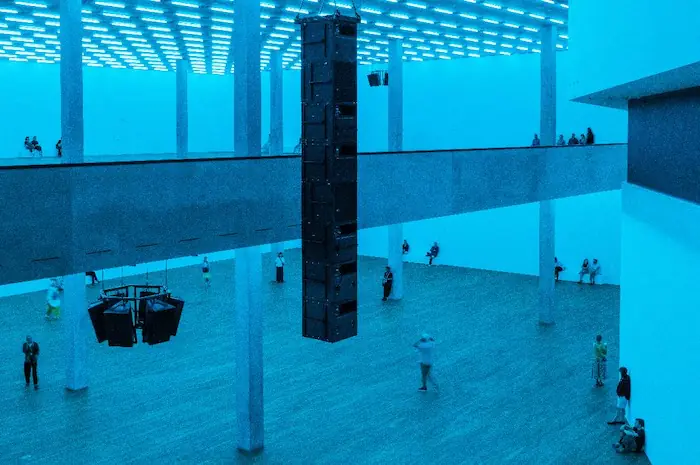
Steve MᶜcQueen: 66–76–26
10 October thru 17 February, 2027 at the Guggenheim Bilbao
There aren’t many Renaissance Men these days … artists (men and women) who have the talent to conquer multiple genres. Still young (sort of) at 56, Steve McQueen OBE already has a lot of hardware on his mantle including an Oscar (“12 Years a Slave”), two BAFTAs and a Golden Globe. Oh, and he also does art installations. Not bad for a guy from Ealing who was once placed in high school classes for future manual laborers.
You can sample McQueen’s versatility at the Guggenheim in Bilbao. Once you get past all the highfalutin artsy-fartsy verbiage on the museum website, you can see that this is a light-and-sound installation that’s an extension of his other media and film … all about sensory stimulation.
General admission tickets are 18 euros and you can choose your date and time here.
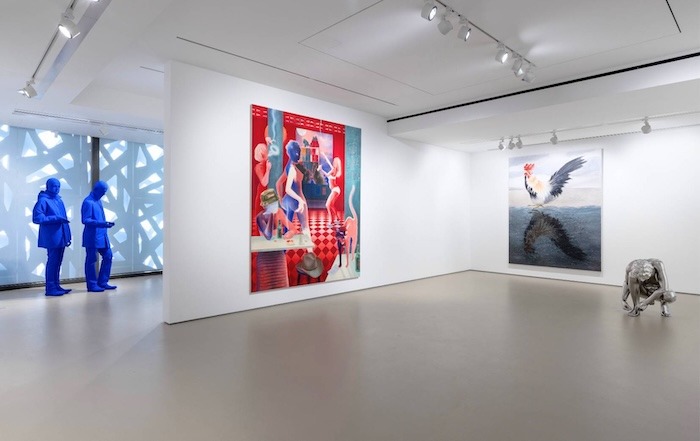
The Way We Live Now
Now thru March 2027 at the The George Economou Collection in Athens
This retrospective show in Athens, which isn’t exactly a center of art, is getting noticed because it dares delve into how we got to 2026 and the velocity and madness of modern life. The concept takes its inspiration from Anthony Trollope’s 1875 novel about how society was rapidly moving away from the norms and standards of the Victorian era into a world drunk on greed, scams and the acquisition of material goods. (Sound familiar?)
From the museum website:
In this group exhibition, the artists invite us, with their unique sensibilities, to observe how they have been informed, if not shaped, by “the way we live now”—as political creatures, as humans longing for intimacy, as observers in and of the world that has made us.
The show is organized on three themed floors – ‘Intimacy’, ‘Politics’ and ‘Being.’ David Hockney, Jenny Saville, David Hammons and Louise Bourgeois are among the big names.
Entry is free, free!
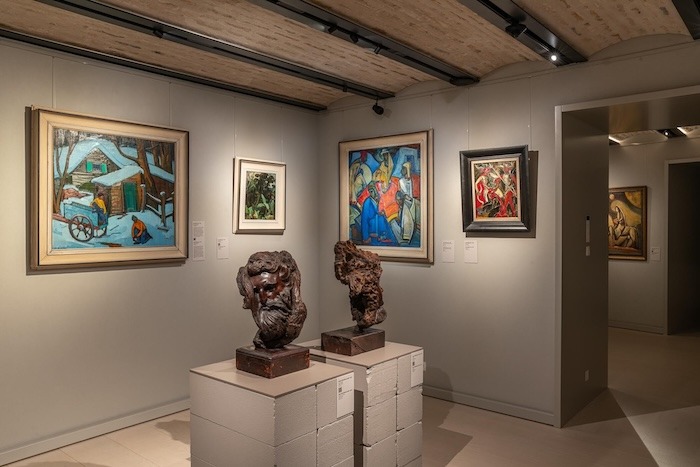
Artists on the Move
Now through May 2027 at the Lithuanian Art Centre TARTLE in Vilnius
Vilnius might not the be the first city that comes to mind when you think of art centers. But the Lithuanian Art Centre TARTLE, holds one of Central Europe’s largest private art collections TARTLE just opened a new exhibition, “Artists on the Move.”
The show presents rarely exhibited works and the life stories of Lithuanian émigré artists who pursued paths of transatlantic and continental migration. The exhibition spans a period from studies at Parisian academies in the 1910s to the heights of modernism and the maturity of exile at the end of the century when Lithuania was under Russian dominatin,
“Artists on the Move” brings together more than 100 works and documents that illuminate the individual life stories. The exhibition presents not only works by Lithuania’s most celebrated artists – Pranas Domšaitis, Jacques Lipchitz, Jonas Mekas, Jonas Rimša, Kazys Varnelis, Viktoras Vizgirda, and Kęstutis Zapkus – but also those of lesser-known figures.
“This exhibition offers an opportunity to examine the phenomenon of migration from a broader perspective,” says curator Emilija Vanagaitė. “It would be no exaggeration to say that migration surrounds us every day, often with negative connotations. But this exhibition is not only about loss – it is also about searching, discovery, and the mark that Lithuanians have left on the world.
“Looking back at history, we can begin to appreciate the positive dimensions of such upheavals; and with that understanding, we may view the present with greater clarity.”
TARTLE’s collection comprises nearly 8,000 objects, including paintings, sculptures, graphic art, maps, books, examples of goldsmithing, photographs and historical artifacts.
Tickets to “Artists on the Move” are 15 euros and you can book yours in advance here.
Peggy Guggenheim in London: The Making of a Collector
Now thru 19 October at the Peggy Guggenheim Collection, Venice
Maybe the coolest thing about being rich and famous is, famous artists want to hang out with you. Think Andy Wahol and The Factory, Picasso and the gang hanging out with Gertrude Stein in Paris and Keith McNally mingling with Julian Schnabel, Jean-Michel Basquiat and the artists who collected at McNally’s Odeon restaurant.
At 24 years old, Peggy Guggenheim inherited a fortune from her father, who died on the Titanic. She set about using it to collect as much art as she could cram into her homes and galleries. Guggenheim promoted pretty much every mid-20th century artist you can think of at her Guggenheim Jeune gallery in London before moving to New York. But over the course of eighteen months – January 1938 through June 1939 – the Guggenheim Jeune gallery was “a beacon for the avant-garde movements of the era, known for championing and promoting local and international artists,” according to the museum website. And that’s what’s on display now.
Artists include Vasily Kandinsky, Piet Mondrian, Jean Cocteau, Salvador Dalí, Kandinsky, Henry Moore and many others.
Later, she even gave a show to a 15-year-old Lucien Freud.
All these years later, the Peggy Guggenheim Collection in Venice is staging “Peggy Guggenheim in London: The Making of a Collector” as we speak, the first large-scale museum exhibition celebrating Guggenheim and Guggenheim Jeune.
Tickets are 14 euros for adults and we don’t see an extra fee for this show. You can get your tickets and schedule your visit here.
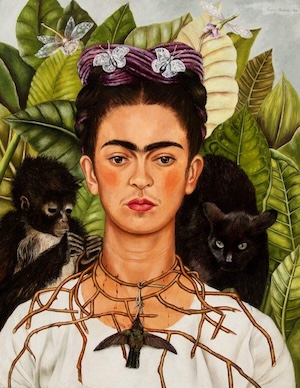
Frida: The Making of an Icon
Now thru 3 January 2027 at the Tate Modern in London
If Frida Kahlo were still with us, she’d be crazy rich from all the ads and marketing campaigns that use her public domain image. That monobrow. Those eyes. That unsmiling confidence that she can do what few women had done before her … shake the art world to its foundations. And she did.
Kahlo was a rare combination of a German-Hungarian Jewish immigrant to Mexico (her father) and a Spanish/ native Mexican mother. That multi-cultural background was a huge influence on her art, as were all her physical challenges including polio and severe injuries in a bus crash. What do they say? “From pain comes art ….”
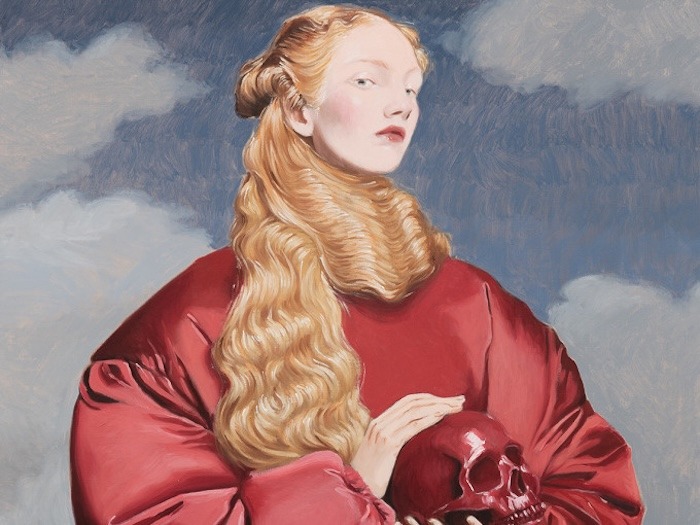
Mary Magdalene: Sin. Pray. Love.
17 September thru 17 January 2027 at the Städel Museum in Frankfurt
Sure, this is a show about a religious figure. But really, it’s a show about the human psyche, sexuality and how we process spirituality. Mary Magdalene likely never existed, yet has come to define historic epochs. Artists from the early Christian movement through the Renaissance to the modern era had their ideas about who she was and what she looked like. (The Nieves González painting above blows our minds.) So, “Mary Magdalene Sin. Pray. Love” includes more than 100 paintings, sculptures and works including major loans from German and international collections.
The Städel Museum website sums up this show nicely:
The exhibition traces the transformation of her image over the centuries—from apostle and devoted follower of Jesus to sinner and ascetic penitent, from ecstatic saint to modern, self-determined woman and identification figure.
Early bird tickets are on sale now for 15 euros. You can get yours here.
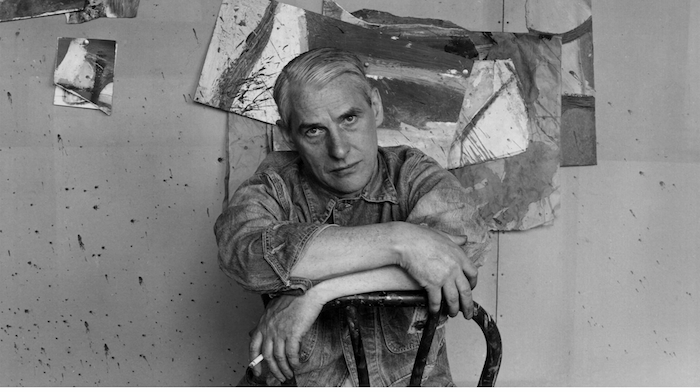
Willem de Kooning at Work
9 October thru 17 January at the Rijksmuseum, Amsterdam
You probably know Willem de Kooning’s distinctive abstract impressionist works on sight, and even know the story of how he stowed away on a ship from his native Rotterdam, where he grew up poor, to sneak into the U.S. If you do, you’ll want to see this show marking 100 years after his arrival in the New World.
De Kooning often gets compared to his contemporary Jackson Pollack and they had a lot in common – the booze, the hard living, the women and the absolute game-changing affect they had on the world of abstract art. “I never was interested in how to make a good painting…,” de Kooning once said. “I didn’t work on it with the idea of perfection, but to see how far one could go .… “ And that he did, with his style and approach constantly evolving.
De Kooning painted for seven decades, long after he’d started to feel the affects of dementia. This show, a collaboration between the Rijksmuseum and the Art Institute of Chicago, promises about 120 works from throughout his career.
It costs 25 euros to get in the Rijksmuseum, and we don’t see an additional charge for the show. You can get your tickets here.
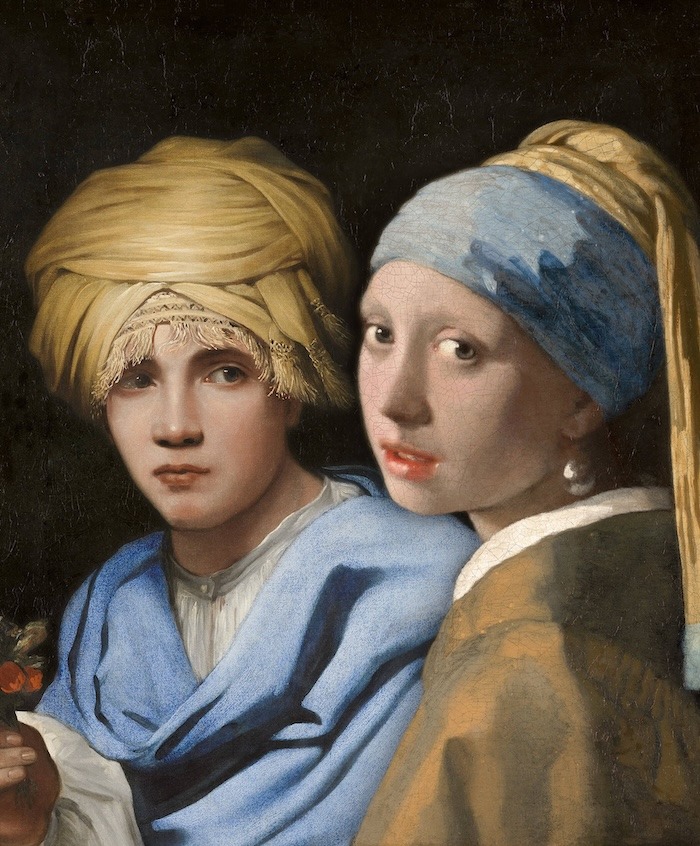
Mauritshuis Loves Thyssen-Bornemisza and Thyssen-Bornemisza Loves Mauritshuis
9 October 2026 to 10 January 2027 at the Thyssen-Bornemisza National Museum, Madrid
This is kinda cool only because we’ve never, ever heard of anything like it before. Two major museums – the Mauritshuis in Den Haag and the Thyssen-Bornemisza in Madrid – are swapping 25 pieces from their collections including an El Greco, a Rembrandt, a Vermeer, a Breugel and a Reubens.
In Madrid, a group of 17th century Dutch masterpieces will be on display, including Johannes Vermeer’s “View of Delft, ” which is quite generous gesture by the Dutch. In Den Haag, you’ll be able to compare and contrast the minimalist Dutch approach to narrative composition with the endless detail of El Greco.
You can see ticket details for the Mauritshuis here.
You can see details for the Thyssen-Bornemisza here.
And in case you’re wondering about the connection between the museums, the Thyssen-Bornemisza was built to house the art collection of Dutch industrialist Baron Hans Heinrich Thyssen-Bornemisza, who born in Den Haag.
Van Eyck: The Portraits
21 November to 11 April 2027 at the National Gallery in London
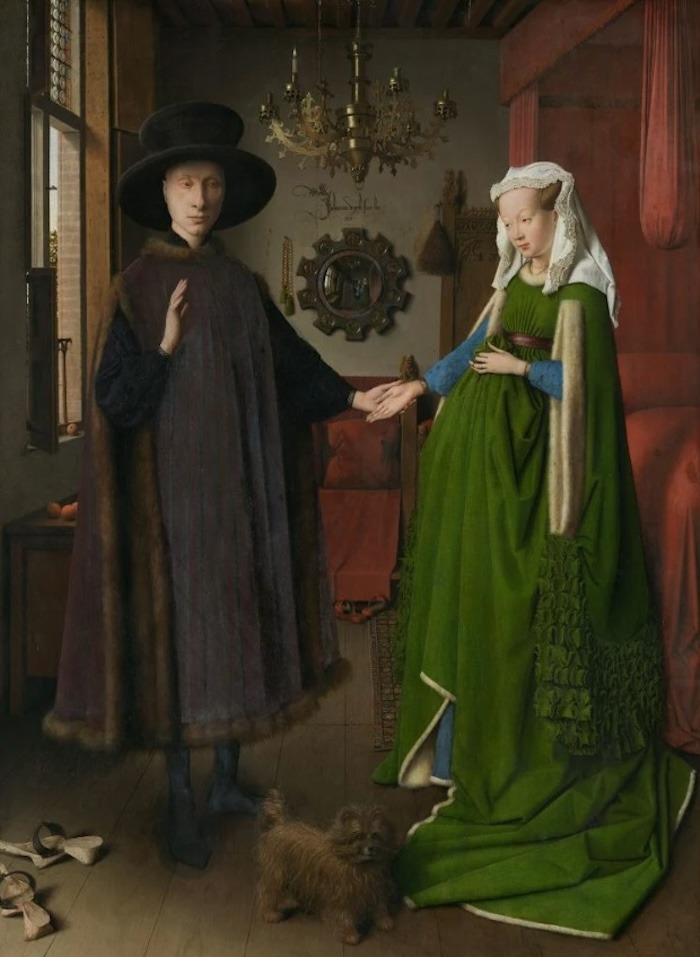
This epic exhibition will for the first time bring all of the Flemish painter’s portraits are together in one place. Or as the Tate’s American-style summary states, “For the first time in history, see all of Jan van Eyck’s portraits together. Only once, only at the National Gallery.” All is only nine, about half the surviving paintings. But hey, just deciphering that one might take the better part of a morning. The critics marvel over Rembrandt and Vermeer. But is there really a more skilled, innovative and influential artist than Van Eyck?
I remember as a college student from hillbilly Kentucky seeing Van Eyck’s “Arnolfini Portrait” in the National Gallery and standing transfixed for what seemed like hours. I couldn’t stop puzzling through this painting, one of rare pieces universally recognized as a “masterpiece.” How did Jan Van Eyck paint the convex mirror? Does the painting celebrate a marriage? Is the woman pregnant? And what’s up with that scruffy little dog?
See more here about the mysteries of the Arnolfini painting here before you go.
The Bayeux Tapestry
From 10 September through 11 July, 2027 at the British Museum in London
Yes, this is one of the most interesting pieces of historic art in the world, no doubt, and the crowds will flock to see it. But the backstory of shipping the Bayeux Tapestry from France to London is wild. Internal debates about whether it should even happen, incredibly expensive preparations once the move was on and, finally, a top-secret run across the Channel in an unmarked truck to the British Museum … top secret until French President Emmanuel Macron tweeted that it was happening.
Art and history collide at the British Museum with the return of the Bayeux Tapestry to its country of origin from the Bayeux Museum in Normandy. The 70-meter-long tapestry depicts (from a particular viewpoint) the Battle of Hastings in 1066 and the victory of the Normans in their conquest of the Anglo-Saxons and the British Isles.
Five times since 1931, British have asked to display it including for the for the coronation of Queen Elizabeth in 1953 and the 900th anniversary of the Battle of Hastings in 1966. Five times, its French said no … until 2026.
National Geographic and the BBC have the best background posts about this whole epic effort.
Though billed as a “tapestry,” which is a weaving technique like a kilim, the Bayeux Tapestry is actually an embroidered piece, with wool patterns sewn into linen fabric. The huge work was likely commissioned to mark the opening of Notre-Dame cathedral in 1077, according to the sources we found. The work depicts more than just a battle … it shows life 900 years ago, at the moment what became Britain was born. And as with most historical documents, there are a lot of historical inconsistencies. (See the video above.) Which makes the Bayeux Tapestry even more interesting.
The tapestry is on loan until 11 July, 2027.
As you might imagine with a defining national treasure, this is more than an art show. It is a moment in history, complete with Bayeux Mania and a scramble for tickets and hotel rooms near London. Tickets are on sale now … though there’s currently a pause due to demand. You can see details here.
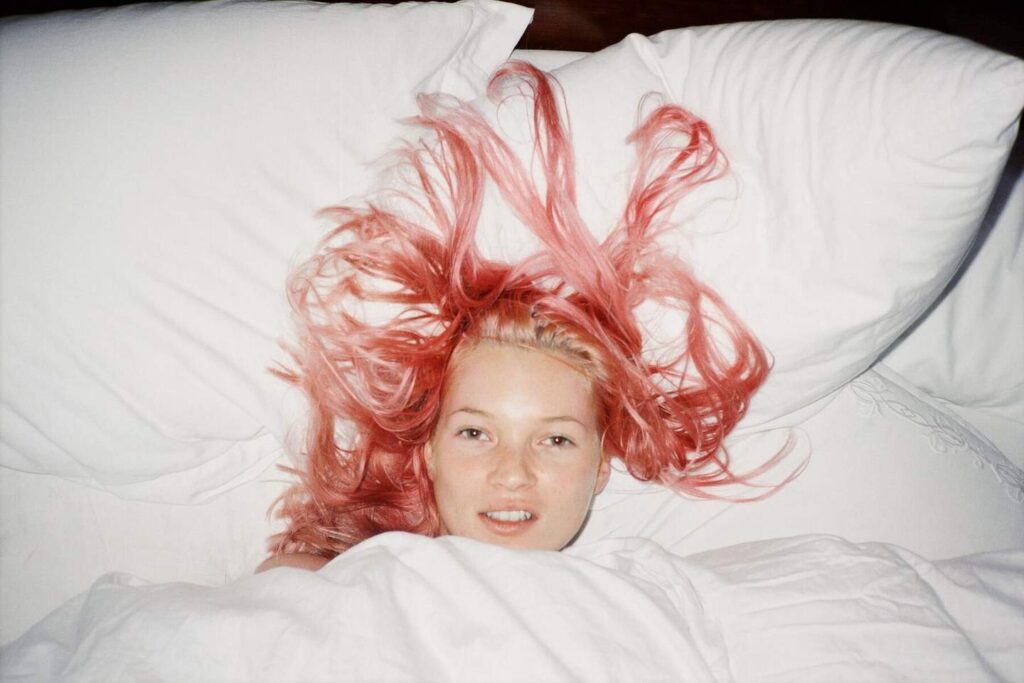
The 90s: Art and Fashion
8 October thru 14 February 2027 at the Tate Briton in London
Arguably the most anticipated show of the year because who isn’t nostalgic for the ’90s? The music, the clothes, the music, the wretched excess … and the glamorous artists who made the covers of Vanity Fair and Interview every month. In the UK, this was a time the country – and the cultural scene – was emerging from the dreary Thatcher years. This show at the Tate has a lot of those artists including Damien Hurst of diamond-studded skulls fame and Steve McQueen and his minimalist art on a massive scale. And there’s more: fashion, art and design, as well as fashion film and music culture with big names such as Vivienne Westwood, Alexander McQueen, and John Galliano. Tickets are on sale and already selling out. Entry is 22 pounds, and the show is another 5 pounds. You can get yours here.
Later this year
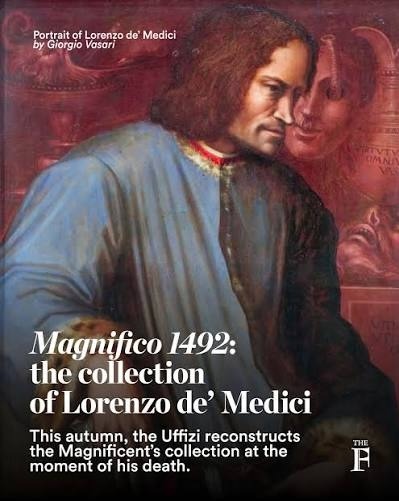
Magnifico 1492
Starting this fall at the Uffizi in Florence
When he wasn’t plotting, scheming and guiding the Florintine Republic, Lorenzo de’ Medici – known as “the Magnificent” – spent his life collecting fabulous paintings and objects d’art. We’ve been reading about the Uffizi’s “Magnifico” show for months now, but haven’t seen anything definitive on the museum website.
We do know the exhibition will bring together paintings, sculpturees, ceramics, gems, cameos, coins, illuminated manuscripts and maps at one of the greatest museums in the world. More as we know more.

Co-CEO of Dispatches Europe. A former military reporter, I'm a serial expat who has lived in France, Turkey, Germany and the Netherlands.