(Editor’s note: This post on the new Cureon medtech center is part of our Tech Tuesday series and is a collaboration with High Tech Campus Eindhoven. Dispatches covers tech because so many of our highly skilled internationals are founders and innovators.)
Eindhoven is renowned for changing the world for the better – from lightbulbs to CDs to the world’s most complex machines that are even now transforming the semiconductor industry. Building on that concentration of deep tech companies in semiconductor and advanced manufacturing, High Tech Campus Eindhoven is writing the next chapter in innovation with Cureon, a new hub at the intersection of healthcare and deep tech. This isn’t just about growth at Campus; this is about an intense collaboration that includes Brainport and BOM to add another industry sector to the regional greater ecosystem.
Cureon was developed by HTC and Smart BioMaterials Consortium (SBMC), with support from Brainport Development and the Brabant Development Agency (BOM) to connect MedTech and BioTech innovators within the Brainport ecosystem.
Its mission is to help early-stage and scaling companies in medical technology and biomaterials accelerate from research to market, with advanced facilities and a strong partner network.
Dedicated space
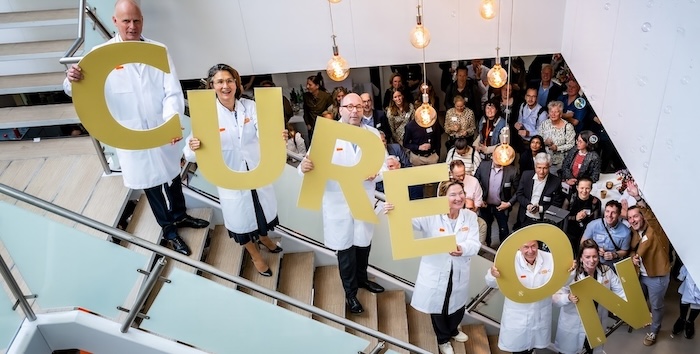
This initiative is getting a dedicated Campus space. The Cureon MedTech and BioTech Innovation Center will be in Building HTC 11. The space creates a flexible environment where startups, scale-ups, and researchers can develop, test and refine technologies and therapies.
- Offices have flexible or dedicated layout options
- Shared and private laboratories with access to advanced equipment
- GMP-compliant clean rooms for clinical-grade prototyping and pilot production
- Meeting rooms, event spaces and collaboration areas designed to encourage exchange and partnership
- Technical infrastructure, including high-speed data connections, climate-controlled labs and secure storage
The building provides a variety of flexible spaces that can be quickly tailored to the needs of innovative health ventures.
New challenges beget new tech
Of course, MedTech companies have always been present at HTCE. It’s always been part of the wave of continuous innovation because MedTech attracts innovators who want to help people get healthy and stay healthy.
Brainport Eindhoven is home to more than 350 MedTech companies and generates 90 percent of all national MedTech patents. Nearly half of the national life sciences and health production value originates here, making the region an ideal place to bring innovations to market.
With AI and new technologies such as sensors, robotic surgery and CRISPR, suddenly, there is an even greater density of players in Eindhoven in all layers of the MedTech industry, working in concert to address global health challenges.
The inspiration for Cureon comes out of the fact the sector has reached escape velocity. There are more than a dozen promising efforts working alongside mature companies and research institutions, all with serious ambitions and resources to revolutionize a number of healthcare and MedTech categories. There is a density of talent at all levels of the campus’ MedTech industry and they all work in concert to address global health challenges
They’re building on Campus resident Philips’ decades of pioneering CT imaging, developing solid-state detectors and introducing Spectral CT technology. TNO has produced big breakthroughs from vaccines to biometric sensors and advancing AI in image recognition. And there’s the multiplier effect, with TNO spinning out AIKON Health, for example, with its technology that helps doctors and patients stay ahead of heart care management.
Ecosystem benefits:
The HTCE ecosystem is a built environment that stimulates innovation, yes. But the campus is literally surrounded by inspired people on similar journeys. Companies that join the Cureon center benefit from direct collaboration with Eindhoven University of Technology, hospital networks and leading scientists. But it’s deeper than that – High Tech Campus boasts a network of service providers, investors and venture building programs. The location ensures access to technical, legal and regulatory expertise, as well as highly skilled engineering and biomedical talent.
Here is a sampling of startups, scale-ups and R&D institutions already on Campus:
AIKON Health – AIKON Health is a spinoff from TNO Holst Centre, specializing in personalized heart failure management.
Bambi Medical – Bambi developed a wireless neonatal vital sign monitoring system – the Bambi Belt Solution.
Gilbert – Gilbert is a spin-off of Delft University of Technology (TU Delft). Gilbert is developing soft mist inhalers based on proprietary electrospray technology to improve treatment for patients with difficult to treat lung conditions.
Holst Centre – Holst Centre is an independent open-innovation R&D centre that develops generic technologies for wireless autonomous sensors and flexible electronics.
imec – imec does research into advanced semiconductor technology and silicon photonics including artificial intelligence and data processing, sensor solutions for smart healthcare.
Philips – Philips is a leader in diagnostic imaging, image-guided therapy, patient monitoring and health informatics, as well as in consumer health and home care.
Phlecs – Phlecs is redefining how patients, as well as healthcare professionals, approach psoriasis treatment.
Plasmacure – Plasmacure has developed a medical device for wound healing stimulation using cold plasma.
PRECEYES – The PRECEYES Surgical System (a Zeiss Company) is a robotic assistant for vitreoretinal surgery. It supports surgeons in inserting and manipulating instruments inside the eye.
ShanX Medtech – Provides innovative in-vitro diagnostic platforms for antibiotic susceptibility testing.
Sirius Medical – Sirius Medical develops screening programs and advanced diagnostics which enable detection of cancer at an early stage. It’s a spin-out from the Netherlands Cancer Institute and the University of Twente.
SonicPrecision – SonicPrecision has developed technology providing real-time monitoring of catheter stability, procedure safety, and ablation quality, during cardiac arrhythmia treatments.
Salvia BioElectronics – MySalvia Therapy features an ultra-thin implant that comprehensively targets key nerves involved in migraine.
STENTiT – STENTiT is a medical device spin-off company from Eindhoven University of Technology, focusing on the development of regenerative endovascular implants.
TNO – TNO is the Dutch national R&D effort, conducting the most advanced research in multiple areas including digital health and medical devices.
Usono – Usono makes the ProFix device, advancing the use of ultrasound by improving and innovating the way ultrasound examinations are performed.