Despite Berlin being somewhat of a mecca for drug use and clubbing, substance testing has historically been illegal due to very strict possession laws, or auf Deutsch, “Betaubungsmittelgesetzt.”
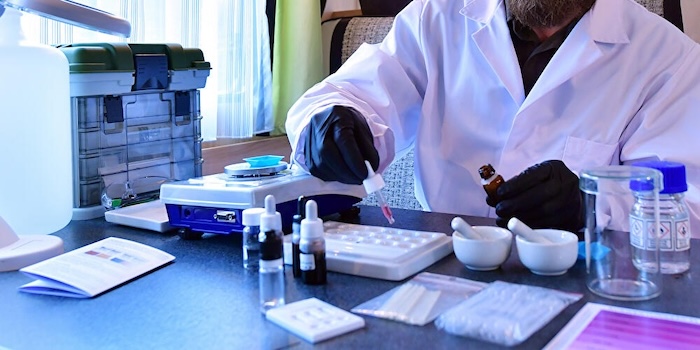
In 2023, after years of lobbying by activists and harm reduction groups, the Berlin Senate finally allowed a free, anonymous, confidential drug checking pilot project to be launched, funded completely by the state. Users can bring a tiny sample into one of three different testing centres and receive an analysis by phone in a few days.
As a lover of Berlin clubs and a retired dabbler of dangerous substances, I have no use for such a service; my buzz is obtained strictly from Fritz Kola and fat beats.
But I was still curious to see how the system functioned and, remembering that I still had a tiny bit of MDMA leftover from a few years back, I researched my options to get a sample tested.
Buzz kill
There are three places to bring drugs to be checked in Berlin: Fixpunkt / Kotti Kompass in Kreuzberg, Vista / Misfit (Dogen – Suchtbertaung) in Friedrichshain and Schwulenbertaing Berlin in Charlottenburg. The timings are limited and fairly tight: Fixpunkt and Vista operate only on Tuesdays at 4:30 p.m. and 5 p.m. and Schwulenberatung on Mondays at 4 p.m.. Testing capacity is far from abundant with a maximum of 47 samples processed per week across all three centres. Each centre has a set number of tickets that they hand out when they open. To get a spot users are advised to show up at least 15 minutes early.
And so on a rainy Tuesday afternoon I decided to head to Fixpunkt in Kreuzberg. Two trains and 30 minutes later I’m standing outside a nondescript building on Dresdenerstraße with three other people who are all avoiding acknowledging each other, staring into their phones. I follow suit and avoid asking them, “Hey is this where the drug checking happens?!” Ten minutes later, we are buzzed into the building.
The body language of my companions suggests that they have all been here before: they walk with purpose through the door and up the stairs to the next floor, where a nice lady is holding the door open to the centre, welcoming us inside. She hands each of us a ticket for our appointments. I am No. 4 of 12 available spots.
I follow the group inside to a large conference-style room with a giant table on top of which sit pamphlets with information on almost every drug I could imagine, all written in German. There are even booklets for magic mushrooms and alcohol.
A while later, No. 1 is called into a private room on the opposite side of the centre. I check my watch; we have been waiting a total of 30 minutes before the first user was seen. No.2 is called into another room, then No.3 and then me: “Nummer Vier, Bitte!” I walk briskly into the other room where the nice lady who welcomed us is waiting. We sit down at her desk and she begins asking me some questions in German and, much to my delight, doesn’t ask me if I would prefer to speak English. After five years and many German classes, my Deutsch is apparently good enough to handle a drug testing interview.
Hooray!
Clean
She asks me a bunch of questions which I am told I can either answer or not, totally up to me, including my age, postal code, preferred drug, how old the sample is, how I acquired it and how much it cost. I am then told to produce my sample, which I dig out of a small pocket in my wallet, and am instructed to transfer its contents into a small plastic vial that she provides me.
This is a bit of an awkward process, but I get it done okay and hand over the tiny pinch of MDMA. I am given a little strip of paper with an anonymous code name and PIN and a phone number to call the following Monday for my results. I thank the nice lady and exit the center, grabbing some drug literature from the table on my way out. I ride two very crowded Ubahns and arrive back home in another thirty minutes.
Total round trip: One hour and forty-five minutes.
The following Monday, in between sets at my gym in Lichtenberg, I call the number on the little piece of paper. A nice lady answers with a simple, “Hallo?” I fire up my German speaking brain and say that I’m calling to get the results of my test. She asks me for my PIN and I tell her.
“Ja, das ist MDMA, richtig?” she asks
“Ja genau,” I respond.
“Ja das ist 75.5 Prozent MDMA.”
“Und das Rest?”
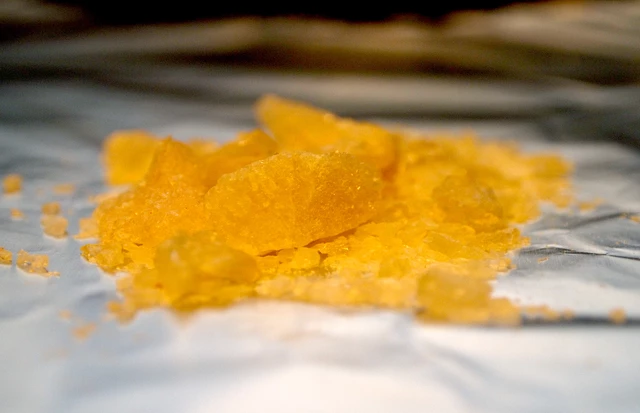
She goes on to explain that there is nothing harmful in the additional contents of my sample, no other drugs, just unnamable filler, likely a sugar or starch used to bulk up the amount and make it drier and easier to handle. I say thank you and hang up the phone.
My sample, although sold as higher concentration than it actually is, was clean.
Berlin isn’t Germany … thank goodness
Of course, that depends on your definition of “clean.” Considering that the majority of drugs on the European market are produced on an industrial scale and generate millions of euros for organised crime, and that the production of such chemicals results in considerable amounts of toxic waste, it’s hard to claim that any illicit substance is actually “clean.”
One also wonders about the labour conditions in such an underground workforce. Standing in the lobby of my gym, I am reminded of all the anti-capitalist conversations I’ve overheard by drugged-up so-called leftists in Berlin bars and clubs, decrying the evils of the state as they snort lines of mafia dust in the toilet.
All in all, Berlin’s state funded, anonymous drug testing service shows great promise and hopefully will develop further beyond its current pilot project status. With such a limited number of testing slots and only three centres that operate at very specific days and times, it’s not as effective as it could be.
For Germany to follow in the footsteps of other countries with a more expansive and liberal approach to harm-reduction services for drug users (i.e. Netherlands, Spain, Austria) the testing centres have to be sold politically as something to promote public health, not as permission to take drugs. With more conservative states such as Bavaria and Saxony that are strongly opposed to such harm reduction measures, that’s a hard sell.
Another example of what people mean when they say “Berlin isn’t Germany.”
**********
See more about Berlin here in Dispatches’ archives,
Read more from Chris here on Dispatches archives